English
 Pусский
 Español
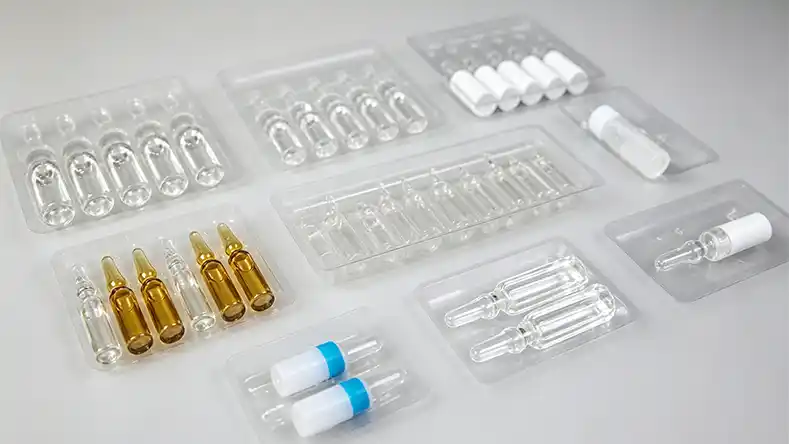
For pharmaceutical manufacturers, glass vial breakage during automated packaging is more than just an inconvenience—it is a direct hit to yield, quality, and profitability. A single broken vial can contaminate surrounding product, trigger line stoppages, and compromise the sterility of an entire batch. Yet many production teams treat breakage as an inevitable cost of high-speed operations, rather than a problem that can be systematically prevented. This guide examines the root causes of glass vial damage in automated blister packaging lines, the technologies that effectively mitigate breakage risk, and the key performance indicators that separate fragile-handling lines from robust ones. Before diving into specific prevention technologies, it is worth understanding how different container types—from ampoules to cartridges—present unique handling challenges, and the Ampoule Blister Packaging Solution provides a concrete example of container-specific design considerations.
Why Glass Vials Break: Understanding the Root Causes
Glass vials are inherently fragile. Their vulnerability comes not from a single point of failure, but from a combination of mechanical, thermal, and handling factors that accumulate throughout the packaging process.
Mechanical Stress and Impact
The most obvious cause of breakage is physical impact. Vials collide with each other during feeding, drop from transfer points, or are subjected to excessive force during placement into blister cavities. What is less obvious is that micro-cracks—invisible to the naked eye—can form on the glass surface during handling. These micro-cracks may not cause immediate failure, but they weaken the glass structure. Under the vibration and thermal cycling of subsequent processing, a micro-crack can propagate into a full breakage.
Surface Defects and Glass Strength
Research in the pharmaceutical glass industry has shown that defects on the glass surface are a major cause of occasional breakage of primary packaging containers during fill-finish or transport. Scratches, chips, and other surface imperfections create stress concentration points. When the vial is subsequently subjected to mechanical handling or thermal sealing, these points become failure origins. Studies have demonstrated that coatings can significantly increase vial strength—by as much as a factor of four—by protecting the outer glass surface from the creation of flaws.
Thermal Shock
Blister packaging involves heat—both in the forming of plastic cavities and in the sealing of lidstock to the formed tray. If glass vials are exposed to rapid temperature changes or uneven heating, thermal shock can occur. The differential expansion between the glass and its contents, or between different areas of the vial itself, can create stress fractures.
Feeder and Transfer Design
Perhaps the most overlooked cause of breakage is the design of the feeding and transfer systems. Traditional packaging lines often use gravity-fed or mechanical pusher systems that subject vials to uncontrolled impacts. The cumulative effect of repeated minor impacts—from chutes, guides, and transfer points—can be as damaging as a single major collision.
Key Technologies for Breakage Prevention
Protecting glass vials during automated packaging requires a multi-layered approach. The following technologies represent the current state of the art in damage prevention.
Servo-Controlled Handling Systems
The single most impactful technology for breakage prevention is servo motor control. Unlike traditional pneumatic or mechanical systems that operate with fixed force and speed profiles, servo systems provide precise, programmable control over every motion.
What does this mean in practice? A servo-driven feeder can accelerate and decelerate gradually, eliminating the sudden jolts that cause vials to impact each other or the equipment. Servo systems can achieve positioning accuracy within ±0.2mm (typical industrial range)—a level of precision that ensures vials are placed into blister cavities with minimal clearance and no forced insertion.
The performance difference is measurable. In syringe feeding applications, industry data shows that servo systems can reduce damage rates from approximately 0.8% to under 0.1%. In advanced blister line configurations with comprehensive servo control—typically incorporating 20 or more servo motors across the entire line (including forming, filling, sealing, cutting, cartoning, bundling, and case packing stations)—validated breakage rates can be reduced to ≤0.1% for glass containers, compared to 1-3% for traditional mechanical systems.
Intelligent Material Handling and Feeders
The feeder is the first point of contact between bulk vials and the packaging line. Traditional feeders rely on vibration and gravity to orient and transport vials—methods that inherently involve uncontrolled collisions.
Advanced feeders address this through several design innovations. Vibration feeders with adjustable tracks allow the amplitude and frequency of vibration to be tuned to the specific vial size and weight, minimizing unnecessary movement. Rising bottle feeding tracks eliminate the need for manual intervention when bottles tip over—a common source of handling damage.
The most sophisticated systems employ servo-controlled feeding that gently places glass containers into blisters using programmable motion profiles. These systems are designed with minimum drop heights, recognizing that even a short fall onto a hard surface can create micro-cracks.
Acceleration-Controlled Handling
For the most sensitive containers—such as prefilled syringes where plunger movement and silicone layer integrity must be preserved—acceleration-controlled handling is essential. This technology limits the forces applied to containers during transfer, with motion profiles designed to ensure forces remain well below levels that could cause glass damage. In HIGHNOW's validated line configurations, handling acceleration is maintained at <1.5G for ampoules and other sensitive glass containers—a design specification developed through extensive testing to prevent micro-crack formation during transfer. For the most demanding applications, the Prefilled Syringe Blister Packaging employs specialized carriers and vision‑assisted alignment to ensure gentle handling while maintaining high throughput.
Advanced Inspection and Rejection Systems
Breakage prevention is not just about avoiding damage; it is also about detecting damage before it becomes a problem. Modern blister lines incorporate advanced self-inspection functions that automatically detect broken blisters, missing products, missing leaflets, and other defects, with 100% rejection of non-conforming products.
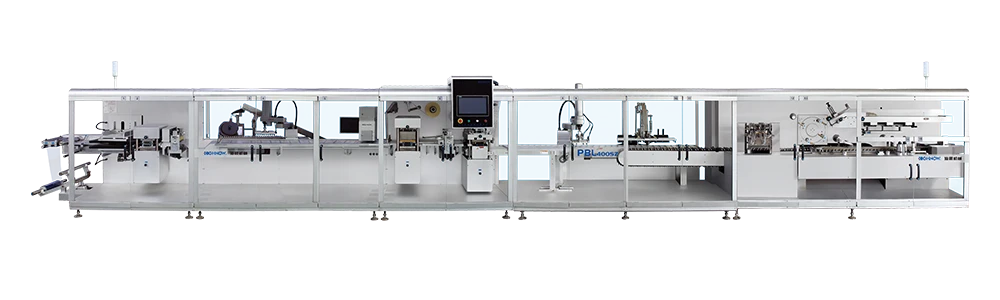
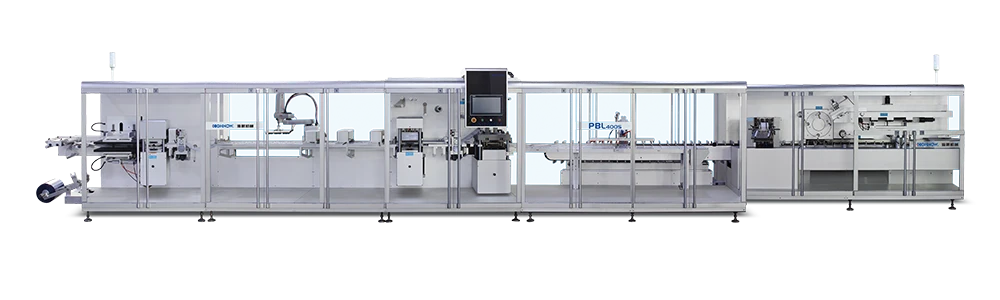
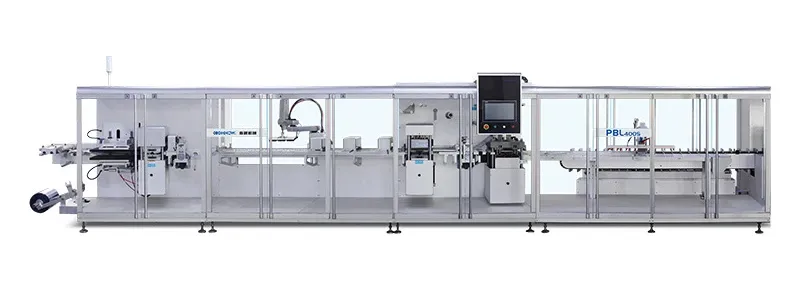
These inspection systems serve a dual purpose: they remove damaged vials from the production stream before they can cause downstream jams or contaminate other products, and they provide real-time feedback that allows operators to identify and correct handling issues before they escalate. The integration of these servo-driven handling, intelligent feeding, acceleration control, and inspection technologies is precisely what a comprehensive Automatic Vial Blister Packaging Machine delivers—offering a complete system designed to protect glass containers throughout the entire packaging process.
Evaluating a Packaging Line for Glass Protection
When assessing a vial blister packaging line for its ability to protect glass containers, the following factors should be considered:
| Evaluation Factor | What to Look For | Why It Matters |
|---|---|---|
| Servo Control Coverage | Lines with comprehensive servo control across forming, filling, sealing, and cutting stations | More servo control means finer control over each stage of the process, reducing impact forces and enabling gentle acceleration/deceleration profiles |
| Feeder Design | Adjustable vibration feeders with minimum drop heights and servo-driven orientation | Uncontrolled drops and excessive vibration are primary causes of micro-cracks |
| Handling Force Specification | Validated force limits (e.g., <1.5G for ampoules) with documented test data | Quantifiable limits demonstrate that breakage prevention has been engineered, not just claimed |
| Inspection Integration | Vision systems with 100% rejection capability | Early detection prevents damaged vials from causing downstream issues and contaminating other products |
| Validation Data | Documented breakage rates under production conditions | Actual performance data proves consistent handling quality beyond theoretical claims |
Real-World Application: What This Means for Production Planning
Consider a pharmaceutical manufacturer producing a high-value injectable drug in glass vials. The existing packaging line operates at a breakage rate of 1.0%—a figure that might seem acceptable until the numbers are calculated.
At a production volume of 10 million vials per year, a 1.0% breakage rate means 100,000 vials are lost annually. Each vial contains a drug product worth, conservatively, $10. That is $1,000,000 in product loss per year—before accounting for the cost of line stoppages, rework, and quality investigation.
Now consider a line equipped with servo-controlled handling, acceleration-limited transfers, and integrated inspection. With a validated breakage rate of ≤0.1%, the annual loss drops to 10,000 vials—a reduction of 90,000 vials and nearly $900,000 in annual savings. This is the difference between accepting breakage as a cost of doing business and treating it as a preventable expense.
The same principle applies to OEE (Overall Equipment Effectiveness). Breakage events cause line stoppages for cleanup and replacement, directly reducing Availability—one of the three pillars of OEE. Lines with lower breakage rates achieve higher Availability, which translates to more output per shift and lower cost per unit.
Next Step: From Prevention Principles to Equipment Evaluation
Understanding the root causes of glass vial breakage and the technologies that prevent it is the first step toward making an informed equipment decision. The next logical step is comparing specific line configurations against your production requirements—considering factors such as container type (vial, ampoule, cartridge, prefilled syringe), target output, and the fragility profile of your specific product.
You can review HIGHNOW's vial blister packaging solutions, which incorporate servo-driven modular design, intelligent material handling, and integrated inspection systems. For a broader perspective on how different container types affect handling requirements, explore our guide to ampoule blister packaging and the gentle handling technologies it requires. To understand how servo control compares to traditional mechanical systems in terms of breakage prevention, see our detailed comparison of HIGHNOW vial blister packaging lines and traditional models.
Related Reading
This article is part of HIGHNOW's technical content library. No direct sales or pricing information is included. All technical discussions aim to help you make informed purchasing decisions.