English
 Pусский
 Español
You're running a batch of high-value parenteral vials through your blister packaging line. Then you hear it—the unmistakable sound of glass breaking. The line stops. Your team begins the tedious process of clearing broken glass from the sterile environment. Production is down for hours. And every broken vial represents not just lost product, but wasted time, materials, and potentially compromised sterility.
If this scenario sounds familiar, you're not alone. Vial breakage remains one of the most persistent and costly challenges in pharmaceutical packaging. But here's the good news: most breakages are preventable. Understanding why vials break—and how packaging line design and operation can be optimized—is the first step toward reducing breakage rates and protecting both your product and your production efficiency.
Why Vial Breakage Matters More Than You Think
A single broken vial on a packaging line might seem like a minor inconvenience. In reality, the consequences cascade far beyond the cost of the lost product itself.
The real cost of vial breakage:
-
Production downtime: When a vial breaks in a sterile environment, the line must be shut down for cleaning and resterilization. In some cases, a single breakage event can cause 8 hours of downtime.
-
Product loss: Broken vials mean scrapped product—and for high-value biologics and vaccines, that loss can be substantial.
-
Cleaning and rework: Glass fragments must be meticulously removed from the sterile environment, requiring significant labor and cleaning resources.
-
Safety risks: Glass particles can contaminate adjacent vials, creating a risk of particulate contamination that may lead to patient safety issues or product recalls.
-
Regulatory exposure: Vial breakage can trigger regulatory observations if packaging processes are not adequately validated or controlled.
For all these reasons, addressing vial breakage isn't just about reducing scrap—it's about protecting patient safety, maintaining regulatory compliance, and preserving production efficiency.
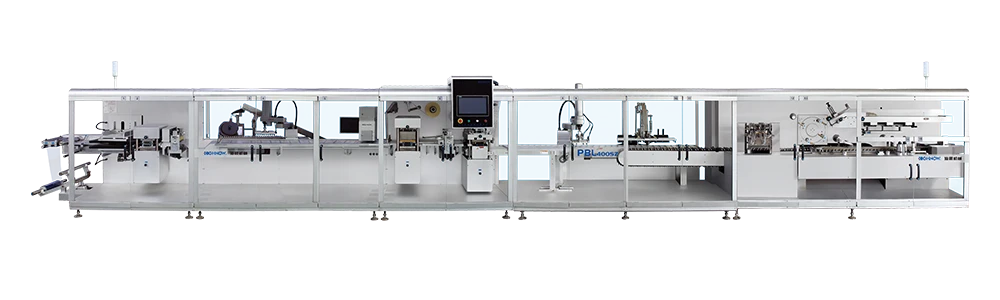
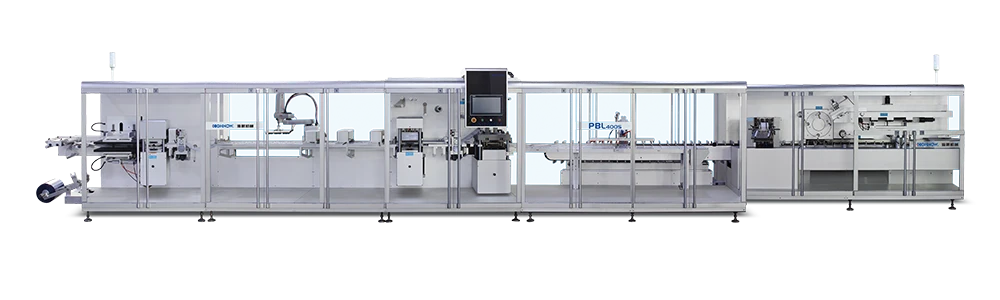
To understand how different packaging line configurations address these challenges, explore vial blister packaging solutions designed for gentle product handling.
The Root Causes of Vial Breakage on Blister Lines
Vial breakage rarely has a single cause. More often, it results from a combination of factors that interact throughout the packaging process. Here are the most common root causes:
1. Mechanical impact and glass-to-glass contact
Vials are fragile by nature. When they collide with each other, with machine surfaces, or with other containers, the resulting impact can cause micro-cracks or immediate breakage. Glass breakages are often the result of glass-to-glass contact, rapid transport movements, and excessive drop heights.
On older or poorly adapted production lines, vials often bump into each other, which causes micro-defects that may not become visible until later in the process. These micro-cracks can then propagate under stress, leading to breakage at the most inconvenient moment.
2. Excessive drop heights and abrupt transfers
Every time a vial is transferred from one station to another—from feeding to cavity placement, from cavity to rejection—there is a potential for impact. The height from which a vial drops, and the speed at which it is transferred, directly influence the force of impact. Even a short drop can be damaging if the vial lands on a hard surface or strikes another container.
3. Thermal stress
Glass is sensitive to temperature changes. Thermal and mechanical stress are major causes of glass defects. High temperatures during washing or hot air sterilization can lead to damage on the line. Similarly, thermal expansion mismatch between the vial and other components—such as stoppers—can cause cracking during sterilization.
For frozen formulations, crystallizable excipients can cause glass vial breakage during freeze-thaw operations. Understanding the thermal profile of your product and ensuring that packaging processes accommodate it is essential.
4. Pre-existing glass defects
Not all breakage originates on the packaging line. Weaknesses in the primary packaging such as microcracks—often introduced during glass manufacturing or subsequent handling—can trigger glass breakages. Glass defects can occur anywhere along the complete processing chain, from the glassworks to the filling and packaging line.
5. Pressure and friction from handling equipment
The process forces of conventional handling equipment—infeed worms, starwheels, holders, and centering bells—can handle vials much too harshly. Friction, pressure, and collisions during filling, sealing, and inspection can all contribute to glass damage. Frictional resistance created by glass-to-glass and glass-to-metal contact can cause tip-overs, jams, and glass breakages.
Solutions for Reducing Vial Breakage
Once you understand the root causes, you can take targeted action. Here are the most effective strategies for reducing vial breakage on blister packaging lines:
1. Invest in gentle feeding systems
The feeding station is often where vials are most vulnerable. Traditional feeding systems can subject vials to abrupt movements and collisions. Modern servo-controlled feeders are designed specifically for gentle handling.
For example, servo-controlled feeders use vibratory plates to transport products to a pickup position, then a separating roller rotates containers into a horizontal position before they are picked up by a robot system with vacuum grippers and placed gently into blisters. This approach minimizes glass-to-glass contact and eliminates harsh drops.
2. Minimize drop heights throughout the line
Every transfer point is an opportunity for breakage. Lines designed with short drop heights—for example, during blister rejection—significantly reduce the risk of glass damage. When evaluating equipment, pay attention to how products are transferred between stations and what measures are in place to cushion impacts.
3. Implement linear inspection systems
Traditional rotary inspection systems often subject vials to pressure and harsh handling during the inspection process—sometimes causing the very defects they're meant to detect. In contrast, linear inspection systems handle containers more gently, with servo-controlled belt drives that manage rotation without applying mechanical pressure. These systems can also inspect vials before filling, detecting pre-existing defects before they reach the packaging line.
4. Use coated vials to reduce friction
Innovations in vial technology can dramatically reduce breakage risk. Low-friction external coatings reduce the friction that leads to vial jams, tip-overs, and breaks. These coatings can improve filling line efficiency by 20-50% and demonstrate a 3x reduction in crack generation. Some coated vials can reduce glass particulates by up to 96%.
5. Implement 100% empty vial inspection
Detecting glass defects before vials enter the packaging line can prevent breakage downstream. Advanced inspection systems can detect cracks, chips, inclusions, and even residual stress in the glass that affects breaking strength—defects invisible to the naked eye. By catching these defects early, you prevent them from causing line stoppages later.
6. Optimize changeover and handling procedures
Even the best equipment can cause breakage if not operated correctly. Standard operating procedures should address:
-
Gentle handling during changeovers and format adjustments
-
Regular inspection of handling components for wear that could cause harsh contact
-
Proper training for operators on the importance of gentle product handling
The PDA's Technical Report No. 87 provides comprehensive guidance on best handling practices for glass vials throughout the pharmaceutical process—from receipt and storage through filling and packaging.
Actual Application Scenarios
A vaccine manufacturer experiencing frequent line stoppages
A high-volume vaccine producer was experiencing vial breakage several times per shift, each requiring line shutdown and cleaning. Investigation revealed that the primary cause was glass-to-glass contact during feeding, compounded by excessive drop heights during transfer to the blister cavities.
Key solutions implemented:
-
Upgraded to a servo-controlled feeder with gentle product handling
-
Reduced drop heights at transfer points
-
Implemented 100% empty vial inspection to catch pre-existing defects
Result: Breakage events reduced by over 70%, with corresponding improvements in line efficiency and reduced downtime.
A CMO packaging multiple vial sizes for different clients
A contract manufacturer handling diverse products found that breakage rates varied significantly depending on the vial size and type being packaged. Smaller vials were particularly prone to tipping and jamming, leading to breakage.
Key solutions implemented:
-
Optimized changeover procedures for different vial sizes
-
Adjusted handling parameters to accommodate the specific fragility of each vial type
-
Implemented linear inspection to detect defects before packaging
Result: Consistent breakage rates across all vial sizes, with overall reduction in rejects and improved client satisfaction.
For customized approaches to vial handling in specific production environments, explore how packaging lines can be configured for your unique requirements.
Next Steps: From Diagnosis to Prevention
Reducing vial breakage on your blister packaging line requires a systematic approach:
-
Document your current breakage rate — Track where and when breakage occurs to identify patterns.
-
Conduct a root cause analysis — Examine whether breakage is due to mechanical impact, thermal stress, pre-existing defects, or a combination.
-
Evaluate your equipment — Assess whether your feeding, transfer, and inspection systems are designed for gentle handling.
-
Consider upgrades — If your equipment is causing breakage, explore options for upgrading to systems with better handling characteristics.
-
Implement preventive measures — From coated vials to improved inspection, choose solutions that address your specific root causes.
Once you have clarified these key decision factors—such as your breakage patterns, product sensitivity, and production volume—comparing the specific capabilities of available packaging solutions becomes the next logical step. You can review HIGHNOW's blister packaging lines for vial products, which incorporate design features for gentle product handling, or explore customized configurations for specialized applications.
For additional guidance on optimizing your packaging process, read our related guide on how vial blister packaging lines work and what to look for in equipment design.
Related Reading
-
How Does a Vial Blister Packaging Line Work? – A Step‑by‑Step Guide
-
What to Know Before Investing in a Vial Blister Line
-
Understanding Container Closure Integrity for Parenteral Products
-
Thermoforming Materials and Their Impact on Product Protection
-
5 Uses of Vial Blister Packaging in Pharmaceutical Manufacturing
This article is part of HIGHNOW's technical content library. No direct sales or pricing information is included. All technical discussions aim to help you make informed purchasing decisions.