English
 Pусский
 Español
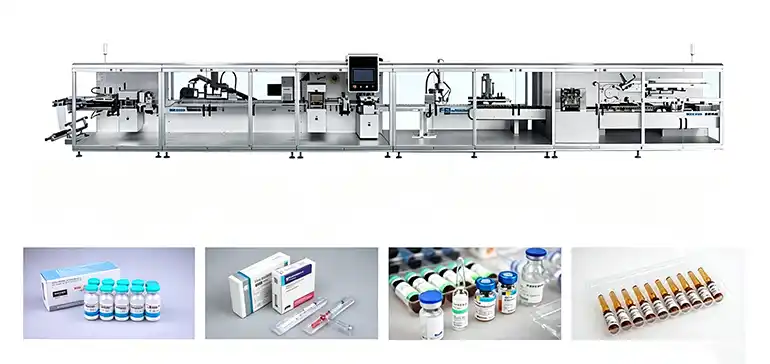
A blister package that looks perfect to the naked eye can harbor microscopic defects—pinholes in the forming film, channel leaks in the seal area, or cracks too small to see. For pharmaceutical manufacturers, these invisible flaws represent a direct threat to product quality: moisture ingress can degrade a sensitive drug, oxygen exposure can oxidize active ingredients, and microbial contamination can render a sterile product unsafe. The consequences can be severe. Data from a recent study indicates that from 2019 to 2024, seal-integrity-related recalls accounted for approximately 2–4% of all FDA product recalls. Yet many manufacturers continue to rely on traditional leak testing methods that are destructive, subjective, and limited in sensitivity. This guide examines the most common leak testing methods for vial blister packages—how they work, their strengths and limitations, and how to choose the right approach for your quality assurance program. For a broader perspective on how packaging line design influences the types of defects that leak testing must detect, explore how vial blister packaging works in pharma production.
Why Leak Testing Matters: The Role of Container Closure Integrity Testing
Container Closure Integrity Testing (CCIT) is the process of verifying that a package maintains its barrier properties throughout its shelf life. For blister packages, CCIT is not merely a regulatory checkbox—it is a fundamental quality attribute that directly impacts patient safety and product efficacy.
The United States Pharmacopeia (USP) provides comprehensive guidance on package integrity evaluation through USP Chapter <1207>, which organizes integrity assurance into three product life cycle phases: (1) package development, (2) routine manufacturing, and (3) shelf life stability assessments. The framework emphasizes that physical testing methods should be developed during packaging development and used later in routine manufacturing and stability testing. USP <1207> further distinguishes between probabilistic methods (such as dye ingress and microbial challenge) and deterministic methods (such as vacuum decay, helium leak detection, and high-voltage leak detection), with a clear preference for deterministic methods due to their greater reliability and reproducibility.
The FDA has reinforced this direction. In its 2008 Guidance for Industry on Container and Closure System Integrity Testing, the agency advised manufacturers to integrate CCIT within stability programs, preferring it over sterility testing for monitoring long-term product stability. The guidance makes a critical distinction: a validated container and closure system integrity test may replace sterility testing in the stability program at time points other than the release sterility test.
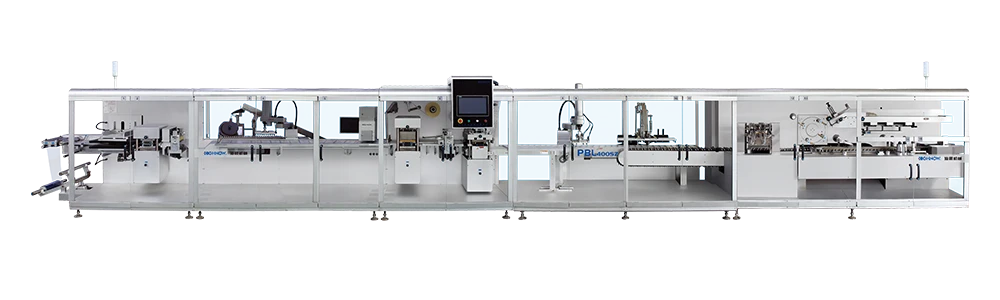
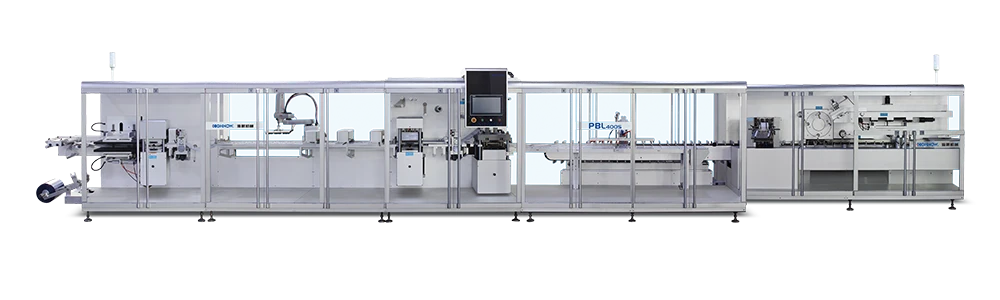
Leaks in blister packs can arise from multiple sources: imperfections in packaging materials, faulty seals between the forming film and lidding material, pinholes in the blister cavity, or suboptimal packaging machine settings. Regardless of the source, the result is the same—a compromised barrier that can allow unwanted gases (most commonly oxygen), moisture, or harmful microbiological contaminants to enter the package. To understand how packaging equipment design contributes to seal quality and defect prevention, you can review blister packaging solutions with integrated quality control features.
The Four Main Leak Testing Methods for Blister Packages
Pharmaceutical manufacturers employ a variety of techniques to test blister package integrity. Each method has distinct advantages and limitations, making the choice highly dependent on product value, production volume, and regulatory requirements.
Method 1: Dye Ingress Testing (Blue Dye Test)
Dye ingress testing remains the most widely used method for leak testing blister packs. The process involves immersing a selection of blister packs in a blue dye solution (typically methylene blue) and subjecting them to a vacuum of typically 200–600 mbar for several minutes. When the vacuum is released, any defective pockets will have absorbed the dye, allowing them to be visually identified.
Advantages: The test is inexpensive, easy to perform, and requires no specialized equipment.
Limitations: The test is destructive—all tested packs, whether they pass or fail, must be discarded. It is also subjective, relying heavily on operator judgment to interpret results. Perhaps most concerning, dye ingress testing has limited sensitivity. Studies have shown that dye testing was only capable of detecting 85% of 15 µm holes and 90% of 12 µm holes. In some cases, blister samples with measurable helium leak rates showed no dye ingress at all—the test simply was not sensitive enough to detect seal quality issues.
Method 2: Vacuum Decay Testing
Vacuum decay is a non-destructive CCIT method that has become increasingly popular for blister packaging. The test is standardized under ASTM F2338-24, the Standard Test Method for Nondestructive Detection of Leaks in Packages by Vacuum Decay Method.
The method works by placing the test package in an enclosed evacuated chamber and measuring the rise in pressure (vacuum loss) over time. If the package has a leak, headspace gases escape into the chamber, causing a measurable pressure increase. The test can detect channel defects in the seal area as small as 125 µm in diameter and hole or crack defects in trays of at least 50 µm.
Advantages: Non-destructive—packs that pass can be returned to the production line. The test is rapid, objective, and suitable for both statistical sampling and 100% on-line testing.
Limitations: Standard vacuum decay may struggle with very small blister cavities that have low headspace volume, as there is insufficient gas to create a measurable pressure differential.
Method 3: Vacuum Deflection by Laser Measurement
This method, standardized under ASTM F3169-16 (2024), offers a non-destructive alternative specifically designed for blister packaging. The test detects leaks by measuring the deflection of the blister pack surface in response to an applied vacuum. When vacuum is applied, the blister surface deflects outward. If a leak is present, air escapes from the pocket, altering the pressure differential and causing a measurable variation in deflection.
The method has demonstrated the ability to detect 15 µm, 50 µm, and catastrophic-sized holes in various blister pack designs. It is particularly valuable because it allows non-destructive and non-subjective leak testing, making it suitable for pharmaceutical production, stability trials, and package research and development.
Advantages: Non-destructive, non-subjective, and capable of detecting very small defects. Results are reported qualitatively as pass/fail.
Limitations: Sensitivity depends on multiple factors including blister pocket headspace, pocket size, lidding material type and thickness, printing, and surface texture.
Method 4: Tracer Gas (Helium/Hydrogen) Testing
Tracer gas testing, standardized under ASTM F2391-22, is the most sensitive of the commonly used methods. Leak detectors based on mass spectrometers detect and quantitatively measure the leakage rate of tracer gases such as hydrogen or helium. Test samples are flooded with tracer gas and placed inside a vacuum chamber; when the chamber is evacuated, any leaking gas is drawn through the analyzer.
Advantages: Highly sensitive, quantitative, and capable of detecting extremely small leaks—some samples have been shown to have leak rates at 10⁻⁷ and lower.
Limitations: The requirement for tracer gas makes it expensive. The method is also more complex to set up and validate than other approaches.
Comparing Leak Testing Methods: A Decision Framework
| Feature | Dye Ingress | Vacuum Decay (ASTM F2338) | Laser Deflection (ASTM F3169) | Tracer Gas (ASTM F2391) |
|---|---|---|---|---|
| Destructive? | Yes | No | No | No |
| Objective? | No (subjective) | Yes | Yes | Yes |
| Typical Sensitivity | ~12-20 µm | ~50-125 µm | ~15-50 µm | <0.1 µm |
| Cost | Low | Medium | Medium | High |
| Speed | Minutes | Seconds | Seconds | Minutes |
| Regulatory Preference | Lower | Higher | Higher | Highest |
When to choose each method:
-
Dye ingress may be acceptable for low-value products or as a screening tool during development, but its limitations make it increasingly unsuitable for regulated pharmaceutical manufacturing.
-
Vacuum decay offers a strong balance of speed, cost, and non-destructive testing for most rigid and semi-rigid blister formats.
-
Laser deflection is ideal for blister packs where standard vacuum decay is insufficient due to low headspace, or where non-subjective testing is required.
-
Tracer gas is appropriate for high-value products, sterile products, or situations where maximum sensitivity is required.
The Shift Toward Deterministic, Non-Destructive Testing
The pharmaceutical industry is gradually moving away from destructive, probabilistic methods like dye ingress toward deterministic, non-destructive approaches. This shift is driven by several factors:
Regulatory Pressure: Both USP <1207> and FDA guidance favor deterministic methods. USP <1207.1> Section 3.5 explicitly states that "a deterministic leak test method having the ability to detect leaks at the product's maximum allowable leakage limit" is preferred.
Cost Savings: Non-destructive methods eliminate product waste. Every pack tested by dye ingress must be discarded. For high-value drugs—such as oncology products—the cost of destroyed product can be substantial. Non-destructive methods allow packs that pass testing to be returned to the production line.
Environmental Impact: Dye ingress generates significant waste: contaminated water that requires treatment or disposal, and incinerated product that produces CO2 emissions. Non-destructive "dry" methods eliminate these environmental costs.
Improved Sensitivity: Advanced non-destructive technologies can now detect defects as small as 5–10 µm—far smaller than what dye ingress can reliably identify.
Real-World Application: What This Means for Quality Assurance
Consider a pharmaceutical manufacturer producing a moisture-sensitive drug in vial blister packs. The current quality control program relies on dye ingress testing of a statistical sample from each batch. The test is destructive, so every tested pack—whether it passes or fails—is discarded. At a production volume of 1 million packs per year and a sampling rate of 0.5%, that is 5,000 packs destroyed annually for quality control purposes alone.
Now consider switching to a non-destructive method such as vacuum decay or laser deflection. The 5,000 packs that previously would have been destroyed can now be returned to the production line—representing a direct cost saving. Additionally, the non-destructive method can potentially be deployed as an in-process control, enabling real-time feedback to line operators and reducing the risk of producing large quantities of defective packaging before the problem is detected.
The economic case becomes even more compelling for high-value products. For an expensive biologic drug, the cost savings from eliminating destructive testing alone can justify the investment in non-destructive CCIT equipment.
Next Step: From Testing Methods to Integrated Quality Systems
Understanding the strengths and limitations of each leak testing method is the first step in building a robust quality assurance program. The next logical step is evaluating how these testing technologies integrate with your specific production environment—considering factors such as product value, production speed, regulatory requirements, and the physical characteristics of your blister packages (cavity size, headspace volume, and lidding material).
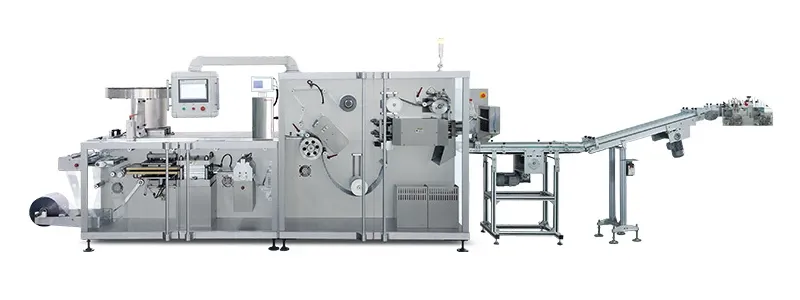
Once you have clarified these decision factors, comparing the specific capabilities of available equipment becomes the next logical step. You can review the Automatic Vial Blister Packaging Machine for high-volume production scenarios, or explore our broader range of blister packaging solutions designed with integrated quality control features.