English
 Pусский
 Español
Buying a blister packaging line for pharmaceutical products—whether for vials, cartridges, ampoules, or pre-filled syringes—is a significant capital decision. The difference between a line that delivers consistent output and one that becomes a production bottleneck often comes down to asking the right questions before signing the purchase order. This article presents seven essential questions every buyer should ask, covering capacity, changeover, compliance, total cost, and supplier capability.
(https://youtu.be/WI3upv8-A1E?si=Rq_VhP2Z_O3Z0Nut)
Introduction: Why the Right Questions Matter
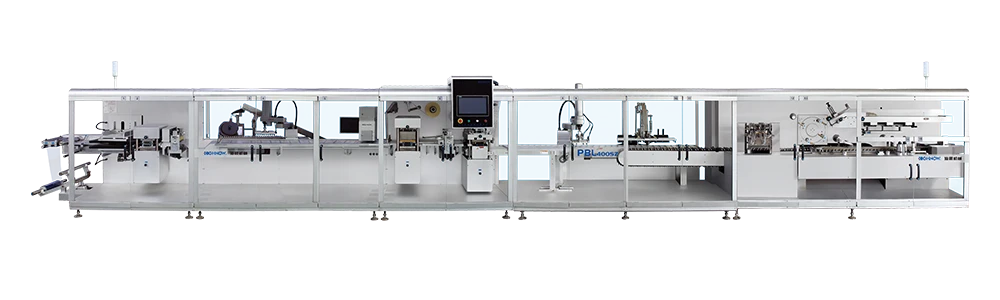
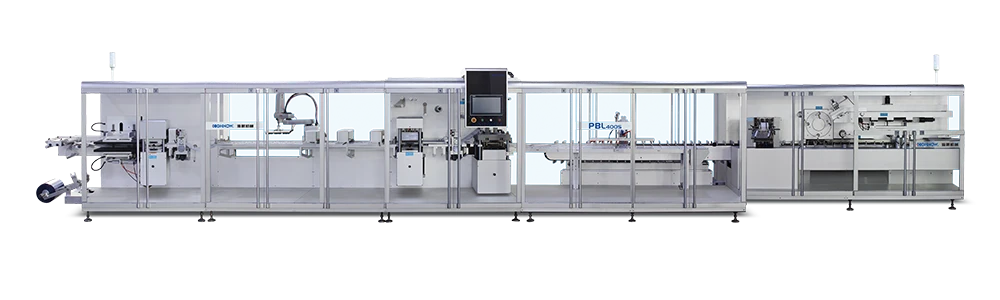
Pharmaceutical blister packaging lines are complex systems that integrate forming, filling, sealing, cartoning, and often serialization. Unlike standard packaging equipment, these lines must operate within strict GMP environments, handle fragile glass containers, and meet regulatory requirements that vary by market.
The challenge for buyers is that supplier brochures and datasheets typically present performance figures under ideal conditions—single product, perfect materials, skilled operators. Real-world performance can differ significantly.
Asking the right questions before you commit helps you separate marketing claims from actual capability, avoid costly retrofits, and ensure the line you purchase will perform in your specific production environment.
Here are seven critical questions to guide your evaluation.
1. What Is the Sustained Throughput, Not Just Peak Speed?
Why this matters:
The speed figure on a datasheet—"up to 400 blisters per minute"—is usually measured under laboratory conditions. In your production environment, actual throughput will be lower due to material changeovers, minor stoppages, and operator adjustments.
What to ask:
- What is the demonstrated throughput over an 8-hour shift, including changeovers?
- What is the average reject rate during normal operation?
- How does throughput vary with different container types and materials?
What to look for:
A supplier who can provide real production data—not just theoretical peak speeds. Ask for references from customers running similar products and volumes. To compare different line configurations for your target output range, you can review the available options across the product range.
2. How Long Does a Format Changeover Actually Take?
Why this matters:
If you run multiple products—different vial sizes, cartridge types, or blister formats—changeover time directly impacts your production efficiency. A line that takes two hours to change over may be acceptable for a single-product facility, but it becomes a major bottleneck for a contract manufacturer or a multi-SKU operation.
What to ask:
- What is the documented changeover time between different formats?
- What tools are required? Does the changeover require specialized skills?
- Are changeover parts pre-set and modular, or do they require manual adjustment?
What to look for:
Quick-change tooling systems that allow format changes in less than 30 minutes with standard tools. Look for modular changeover parts that are pre-set and do not require shimming or calibration.
Ideal answer: A supplier who can demonstrate a changeover process, provide a video, or offer a reference visit where you can observe a real changeover.
3. How Does the Line Handle Fragile Glass Containers Without Breakage?
Why this matters:
Vials, ampoules, and cartridges are typically made of glass. Breakage during packaging not only wastes product—it can also introduce glass particulates that compromise sterility. For parenteral products, this is a critical quality issue.
What to ask:
- What feeding and transfer mechanisms are used to minimize glass-to-glass contact?
- How are containers oriented and placed into blister cavities?
- What inspection systems detect damage before sealing?
What to look for:
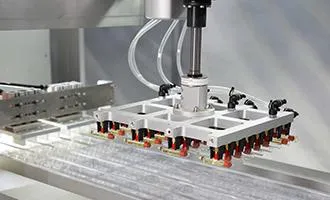
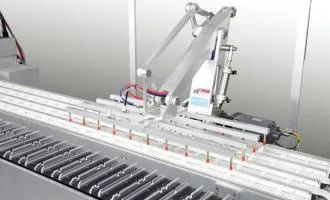
Gentle handling technologies such as servo-controlled feeders, soft-touch grippers, and precision guide rails. Some lines use Bernoulli grippers for non-contact lifting. Infeed sections should include particulate inspection vision systems capable of detecting particles down to 50 microns.
4. What Testing and Validation Documentation Is Included?
Why this matters:
Pharmaceutical packaging equipment must be validated for its intended use under actual production conditions. Regulatory bodies including the FDA, EMA, and WHO require documented evidence that the equipment consistently produces packages that meet quality standards.
What to ask:
- Is Installation Qualification (IQ), Operational Qualification (OQ), and Performance Qualification (PQ) documentation included?
- What test methods are used to verify seal integrity? (e.g., dye ingress testing, vacuum decay)
- Are the test methods aligned with USP standards such as USP <1207>?
What to look for:
A supplier who provides comprehensive validation documentation as part of the package—not as an extra-cost add-on. For critical applications, look for in-line leak detection capabilities using vacuum decay technology.
5. Does the Line Support Serialization and ERP Integration?
Why this matters:
For pharmaceutical manufacturers exporting to regulated markets, serialization is not optional—it is a regulatory requirement. The line must be able to assign unique identifiers to each package, aggregate data, and transmit it to your ERP or MES system.
What to ask:
- What serialization capabilities are built into the line?
- Can the line integrate with our existing ERP system?
- What data protocols are supported?
What to look for:
A Level 4 MES interface that supports standard communication protocols. The line should be able to aggregate and transmit data—including unique product identifiers, batch numbers, and aggregation data—to ensure GDP compliance.
6. What Is the Total Cost of Ownership, Not Just the Purchase Price?
Why this matters:
The purchase price is only the beginning. Tooling, validation, installation, training, spare parts, and ongoing maintenance can add 40–80% to the initial cost. A cheaper machine that breaks down frequently or requires expensive spare parts is not a saving—it is a liability.
What to ask:
- What is included in the quoted price versus what is additional?
- What is the Mean Time Between Failure (MTBF) for critical components?
- What is the availability and lead time for spare parts?
- What training and technical support are provided?
What to look for:
A transparent supplier who can provide total cost estimates including tooling, validation, and projected maintenance costs. Look for MTBF data exceeding 2,000 hours for critical components. For detailed technical specifications of specific models like the PBL-400S series, you can refer to the product detail page.
7. What After-Sales Support and Spare Parts Availability Can You Guarantee?
Why this matters:
Even the best-built line will require maintenance and occasional parts replacement. If spare parts are not readily available, every hour of downtime costs production and revenue.
What to ask:
- Where are spare parts warehoused? What is the guaranteed delivery time?
- Is remote diagnostic support available 24/7?
- Are field service engineers available in our region?
What to look for:
A global service network with certified warehouses in major regions and a guaranteed delivery time for critical spare parts. Look for a supplier who offers Vendor Managed Inventory (VMI) programs that minimize your on-hand stock while ensuring rapid availability.
Checklist: Before You Sign the Purchase Order
Use this checklist to ensure you have covered all critical areas:
| Area | Check |
|---|---|
| Sustained throughput verified with reference data | ☐ |
| Changeover time demonstrated or documented | ☐ |
| Container handling tested with your specific container type | ☐ |
| Validation documentation (IQ/OQ/PQ) included in scope | ☐ |
| Serialization and ERP integration confirmed | ☐ |
| Total cost of ownership estimated (not just purchase price) | ☐ |
| Spare parts availability and support terms confirmed | ☐ |
Frequently Asked Questions
Q1: What is the typical uptime percentage for a pharmaceutical blister line?
A: High-quality blister lines engineered for GMP environments can achieve demonstrated uptime of ≥98.5% in continuous three-shift operations, achieved through components like PLCs and servo motors with predictive maintenance systems.
Q2: How do I know if a line can handle both thermoforming and cold forming?
A: Some lines offer dual-process capabilities: thermoforming for PVC/PP/APET and cold forming for high-barrier aluminum blisters. Confirm this with the supplier and test with your actual materials.
Q3: What is the maximum blister size most pharmaceutical lines can form?
A: Typical blister formers accommodate sheets up to 220×460mm, with adjustable mold travel ranges of 50–220mm for flexible packaging layouts.
Q4: How is seal integrity typically verified?
A: Common methods include dye ingress testing (immersing packs in dye solution under vacuum) and vacuum decay testing. USP <1207> provides guidance on selecting and validating leak test methodologies.
Q5: What regulatory standards should the equipment meet?
A: For EU markets, equipment should carry CE marking and comply with the Machinery Directive, Low Voltage Directive, and Electromagnetic Compatibility Directive. For US markets, look for 21 CFR Part 11 compliance for data integrity.
Q6: Can a blister line be customized for non-standard container shapes?
A: Yes. Many suppliers offer customizable tooling for irregular container geometries, with flexible programming to accommodate round, oval, flat, or unusual shapes without compromising speed or accuracy.
Conclusion
Buying a pharmaceutical blister packaging line is a complex decision that goes far beyond comparing brochure specifications. The seven questions outlined above—covering throughput, changeover, container handling, validation, serialization, total cost, and after-sales support—provide a framework for evaluating suppliers and avoiding costly mistakes.
The key takeaway: ask for evidence, not promises. Request demonstrated performance data, reference visits, and validation documentation. Test the line with your actual containers and materials if possible. And ensure that the total cost—not just the purchase price—is fully understood before you commit.
To compare available blister line configurations and technical specifications in detail, you can explore the full product range. For a discussion of your specific production requirements, the engineering team is available for consultation.