English
 Pусский
 Español
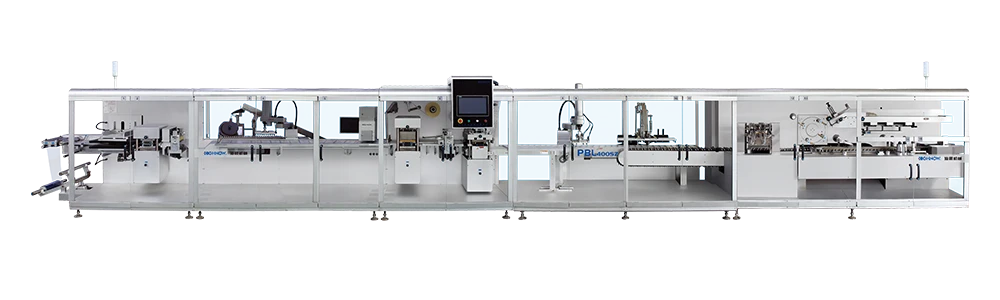
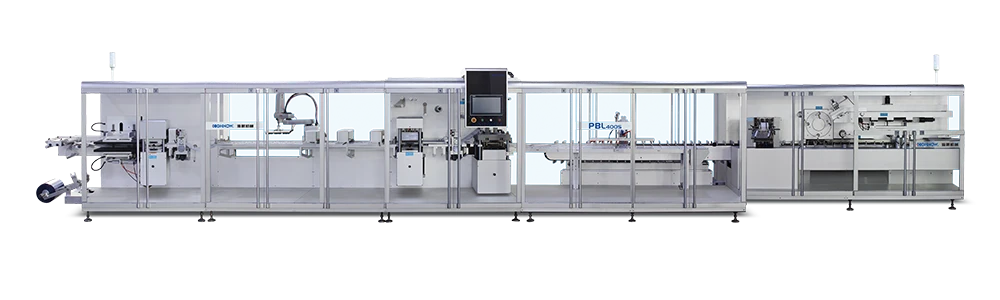
You are evaluating a vial blister packaging line. The brochures all promise high speed and GMP compliance. But when you look past the marketing claims, how do you truly assess whether a line will protect your product, meet your production targets, and not become a maintenance headache?
Understanding the technical workflow is necessary, but it is not sufficient. The real question is: What should you look for at each stage of the process to de-risk your investment?
This guide walks through the complete vial blister packaging workflow—from vial feeding to cartoning—but with a deliberate focus on the critical decision points that matter to production managers and procurement professionals.

Stage 1 – Vial Handling and Feeding: Where Breakage Risk Begins
The process starts when filled vials leave the filling line and enter the blister packaging machine. Before they reach the blister web, vials typically pass through a feeding system that orients and transfers them.
The Decision Point:
At this stage, the primary risk is vial breakage. Glass vials, particularly those with thin walls or small diameters, are vulnerable to impacts and sudden movements. Breakage means product loss, cleaning downtime, and potential safety hazards for operators.
What to look for in equipment design:
-
Servo-driven pick-and-place systems that use smooth acceleration/deceleration profiles, rather than pneumatic systems that rely on jarring impacts.
-
V-shaped soft-tip inserts in transport pucks that cradle the vial securely without scratching or chipping.
-
Cam-controlled transfer mechanisms that eliminate sudden starts and stops.
These features collectively reduce breakage rates to below 0.1%, even for delicate glass vials. For a high-value parenteral drug, this reduction alone can justify the equipment premium.
Stage 2 – Blister Forming: Material Choice and Precision Control
Once vials are ready, the blister web must be formed to create cavities that match the vial dimensions. The material is heated and drawn into a mold using positive pressure air (blow forming), then cooled to set its shape.
The Decision Point:
Two factors dominate this stage: material selection and temperature precision.
Material Selection:
-
PVC (often coated with PVdC or Aclar) is cost-effective and suitable for products with moderate moisture sensitivity.
-
Cold-formed aluminum (Alu-Alu) offers superior barrier protection, making it the standard for highly moisture-sensitive or potent drugs.
The choice directly impacts product shelf life and stability. A moisture-sensitive drug packaged in PVC without adequate barrier coating can degrade within months, while the same drug in Alu-Alu can remain stable for years.
Temperature Precision:
-
Forming temperature must be controlled within ±5°C to ensure consistent cavity depth and material thickness.
-
Inconsistent forming leads to thin spots that compromise protection or, worse, cavities that do not securely hold the vial, leading to movement and breakage during sealing.
Look for machines with PID-controlled heating systems that maintain tight tolerances. This is not a specification to overlook—it directly determines whether your blister packs will pass compression and drop tests during quality control.
For a closer look at equipment configurations that address these precision needs, explore the HIGHNOW Blister Lines series for high-volume scenarios.
Stage 3 – Product Loading: The Most Delicate Step
Formed blisters move to the loading station, where vials are placed into each cavity. This is the most delicate step in the entire process.
The Decision Point:
The loading method determines both breakage rates and line speed.
| Loading Method | Advantages | Trade-offs |
|---|---|---|
| Robotic Pick-and-Place | Extremely gentle; handles delicate and irregular shapes with ease; flexible for multiple formats | Higher initial cost; slightly lower top speed than mechanical systems |
| Automated Feeding Systems | Very high speed; proven reliability for standard vial shapes | More mechanical contact; higher risk of breakage with thin-walled vials |
For products with high value per vial (e.g., biologics, vaccines) or delicate glass, the robotic approach is almost always the better long-term investment. The reduced breakage and downtime more than offset the higher upfront cost.
Also look for mechanical checks before vials are pressed into the blister—this prevents misaligned vials from being forced into place, which is a common cause of stress fractures.
Stage 4 – Sealing and Lidding: The Critical Quality Attribute
Sealing is where a blister pack either protects the drug or fails. The lidding foil—typically aluminum with a heat-seal coating—is bonded to the formed blister under controlled temperature and pressure.
The Decision Point:
Seal integrity is the single most important quality attribute of the finished pack. A compromised seal allows moisture and oxygen ingress, degrading the product and shortening shelf life. In regulated markets, a seal failure can trigger a recall.
What to prioritize:
-
Multi-zone PID-controlled sealing stations with temperature uniformity of ±1°C across the entire sealing platen.
-
Servo-controlled pressure application for consistent force, rather than pneumatic systems that can vary with line pressure.
-
Integrated seal inspection – such as High Voltage Leak Detection (HVLD) – that can detect leaks as small as 5-10 microns without destroying the pack.
USP <1207> provides guidelines for seal integrity testing methods. Equipment that supports HVLD or dye ingress testing, and provides documentation for validation protocols, will significantly simplify your regulatory submission process.
Stage 5 – Punching, Cutting, and Cartoning: The Final Integration
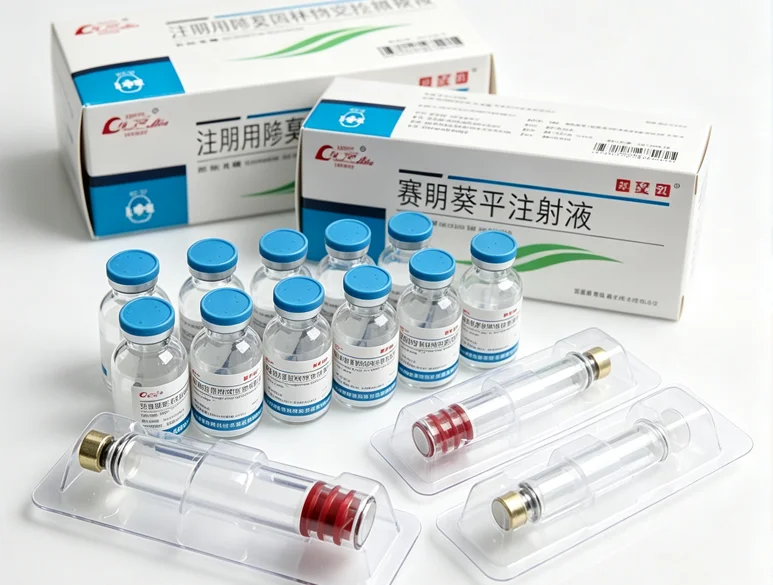
After sealing, the continuous blister web is punched into individual cards, batch numbers and expiry dates are printed, and the cards are transferred to a cartoning machine.
The Decision Point:
This stage is about integration and overall equipment effectiveness (OEE).
Key questions to ask:
-
How does the blister line communicate with the cartoner? Look for machines using EtherNet/IP or OPC UA protocols with industry-standard PLCs (Allen-Bradley or Siemens). This ensures seamless data exchange and synchronized material flow.
-
What is the changeover time? In multi-product facilities, changeover time is a major OEE killer. Machines with recipe-driven servo adjustments and tool-less modular change parts can switch between vial sizes in under 25 minutes.
-
How is reject handling managed? A clear system for diverting defective blisters before cartoning prevents downstream jams and material waste.
A detailed discussion of integrating blister lines with cartoning and downstream equipment is covered in our guide on GMP-compliant auto pharma packaging solutions.
A Practical Framework for Equipment Evaluation
With the workflow and decision points in mind, here is a 5-step framework to guide your evaluation:
| Step | Action | Why It Matters |
|---|---|---|
| 1 | Define your product specifications: vial size, material (glass/plastic), volume (annual units), and moisture sensitivity. | Determines required forming depth, barrier level, and speed. |
| 2 | Request a performance validation test with your actual vials and blister materials. | Validates the machine's gentle handling and sealing performance with your specific materials, not generic samples. |
| 3 | Evaluate changeover speed for your most common vial size transitions. | Directly impacts production flexibility and OEE. |
| 4 | Review the supplier's service level agreement: spare parts availability (98%+), remote diagnostics, on-site response time. | Minimizes downtime when issues occur. |
| 5 | Assess integration capability with your existing upstream (filling) and downstream (cartoning) equipment. | Prevents bottlenecks and ensures a synchronized line. |
For a broader perspective on key questions to ask before committing to a line, refer to our checklist for blister line buyers.
From Understanding to Selection
Understanding how a vial blister packaging line works is the foundation. But the real value comes from translating that understanding into a structured evaluation process.
The five stages described above—handling, forming, loading, sealing, and cartoning—each present specific decision points. By focusing on the features that directly impact breakage, seal integrity, changeover speed, and integration, you can move beyond the brochures and compare options based on what truly matters for your production environment.
Once you have clarified these key decision factors—your required output, vial types, changeover frequency, and integration needs—comparing the specific technical configurations of available options is the next logical step. You can review the HIGHNOW Blister Lines series for high-volume scenarios and GMP‑compliant production.
Related Reading
-
High-Speed vs Standard Vial Blister Machine: Key Differences