English
 Pусский
 Español
A small bottle feeder is not an accessory you choose after the blister machine. It determines infeed stability, breakage rate, changeover time, and how well the whole line reaches its rated output. The right choice depends on container type, speed, batch size, and how the feeder synchronizes with the blister machine and downstream cartoner.
This guide compares the feeder types available for vial, ampoule, cartridge, and syringe formats, and provides a selection matrix, breakage-prevention checklist, and integration points for line acceptance.

Why Feeder Selection Matters More Than It Appears
The blister machine sets the theoretical output. The feeder determines whether that output is reached consistently. A mismatch shows up in several ways:
- Starved infeed during high-speed running
- Vial-to-vial contact and glass-to-glass impact at transfer points
- Frequent minor stops caused by orientation errors
- Long changeover because feeder rails and bowls need manual adjustment
- Cleaning difficulty that slows batch transitions
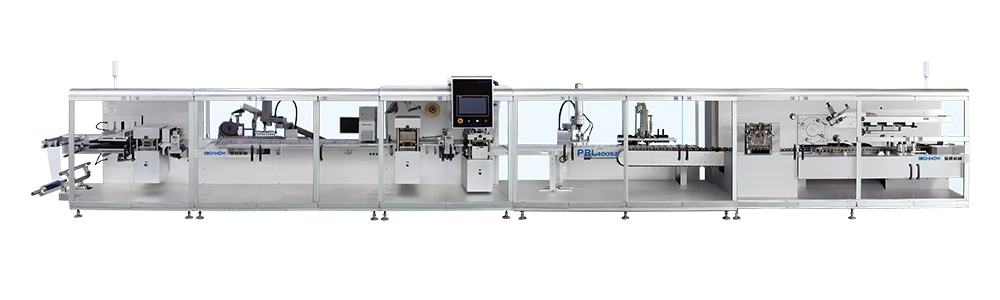
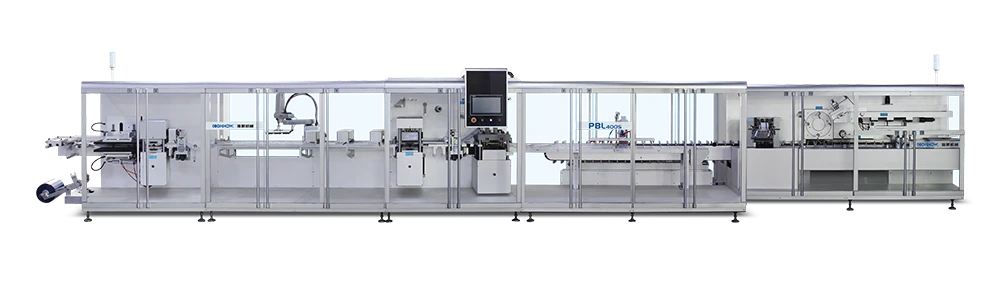
For a line expected to run multiple formats, the feeder is often the component that limits flexibility. Reviewing the full feeder range alongside the blister line configuration is the practical starting point: small bottle feeder options.
Feeder Types and What Each Is Designed For
HIGHNOW's feeder range covers different container geometries and handling principles. The table below is a selection aid, not a ranking. Each type is suited to particular conditions.
| Feeder | Handling principle | Container focus | Typical performance reference |
|---|---|---|---|
| Leader Feeder | Versatile feeding for diverse pharmaceutical products | Cartridge bottles, syringes, vials | Up to 1,500–2,000 blister/min depending on format and configuration |
| Planetary Feeders | Servo-controlled gentle placement into blisters or trays | Sensitive parenteral products: vials, ampoules, syringes | Up to 1,500–2,000 blister/min depending on format |
| Pioneer Feeders for Vials (horizontal) | Horizontal handling with precise orientation | Ampoules, vials, oral liquid, cartridges | Up to 1,500–2,000 blister/min depending on format |
| Rocket Feeder for Vials (vertical) | Vertical stuffing combined with horizontal boxing | Vial bottles | Up to 1,500–2,000 blister/min depending on format |
| ESA Feeder | Servo-controlled gentle handling for multiple small containers | Ampoules, vials, cartridges, oral liquid | Up to 1,500–2,000 blister/min depending on format |
| Long March Feeder | Micro-step transport with vacuum cups | Ampoules, vials, cartridges | Up to 1,500–2,000 blister/min depending on format |
| Satellite Feeder | Advanced automated handling for complex packaging | Ampoules, vials, oral liquid, cartridges | Up to 1,500–2,000 blister/min depending on format |
The performance references above are planning ranges published for the feeder category. Actual output depends on container dimensions, blister layout, and line configuration. Confirm the specific model and format with the technical team before finalizing a layout.
Selection Matrix: Match the Feeder to Container and Production Context
Use the following matrix as a first-pass screening tool. It is organized by container type and the constraints that most often drive feeder choice.
| Container type | Primary feeder options to review | Key selection question | Integration note |
|---|---|---|---|
| Vial (glass or plastic) | Leader, Pioneer (horizontal), Rocket (vertical), ESA, Long March, Satellite | Is the priority output, gentle handling, or compact footprint? | Confirm infeed height and buffer with the blister machine |
| Ampoule | Planetary, Pioneer, ESA, Long March, Satellite | How fragile is the ampoule body, and what orientation does the blister cavity require? | Gentle transfer and orientation stability are critical |
| Cartridge | Leader, Planetary, ESA, Long March, Satellite | Does the cartridge geometry require horizontal or vertical presentation? | Confirm plunger and cap clearance |
| Prefilled syringe | Leader, Planetary | Are syringe sterility and plunger position maintained during transfer? | Anti-tilt and carrier design should be reviewed |
| Oral liquid bottle | Pioneer, ESA, Satellite | Is the bottle stable at speed, and does it need leak-resistant handling? | Confirm bottle weight and base geometry |
| Special-shaped bottle | Satellite, ESA | Can the feeder accommodate irregular geometry without custom tooling delays? | Custom guides may be required; confirm lead time |
To compare different feeding systems and identify the ideal model for your containers, visit our small bottle-feeder feeding systems page. It covers the Leader, Planetary, Pioneer (vial application), Rocket, ESA, Long March, and Satellite feeding systems.
Breakage Prevention: What to Look For in the Handling Path
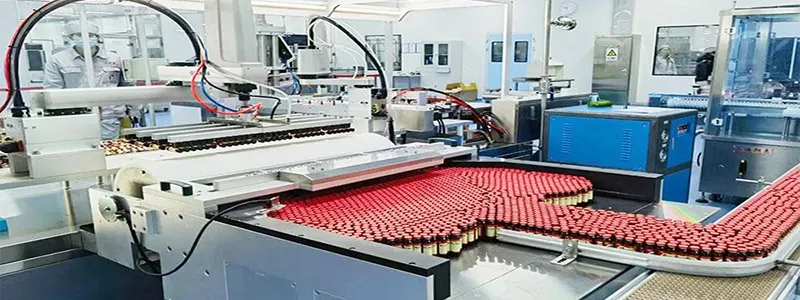
Glass breakage in the feeder is usually caused by glass-to-glass contact, rapid acceleration, or uncontrolled drop. The feeder design should reduce these risks at every transfer point.
Design features to verify:
- Servo-controlled motion with programmable acceleration and deceleration profiles
- Soft-contact or compliant gripper surfaces where containers are picked
- V-shaped or custom-contoured pucks that cradle the container without body contact
- Vacuum pick-up rather than mechanical pushing where geometry allows
- Limited drop height between the feeder and the blister cavity
- Rejection logic that removes damaged or misoriented containers before they reach sealing
Industry references indicate that breakage rates in high-speed vial handling can be controlled to ≤0.01% under defined conditions when impact loads are managed through coordinated transport trajectories and speed control. That figure is a reference point, not a guarantee. Actual breakage depends on container quality, feeder setup, and line tuning. Confirm the expected breakage rate with the supplier using your specific containers and a defined acceptance test.
Integration with the Blister Machine and Downstream Cartoner
A feeder that performs well in isolation can still underperform on the line if the integration is not defined. The following points should be confirmed during technical review:
Speed synchronization. The feeder's output should match the blister machine's punching frequency and plate count, not just the rated maximum. If the blister machine runs at 30 cycles/min with 4 plates per cycle, the feeder must sustain the corresponding container flow without starving the infeed.
Buffer and accumulation. A short buffer between the feeder and the blister machine absorbs minor stops and prevents the entire line from stopping for a single orientation fault. The buffer size should be defined based on the feeder's recovery time and the blister machine's cycle time.
Reject and bypass logic. Containers rejected by the feeder should not enter the blister cavity. Confirm the signal path and the physical reject mechanism. If the feeder detects a misoriented or damaged container, the reject should be logged and removed without interrupting the main flow.
Interface signals. At minimum, confirm ready, fault, speed reference, and container-present signals between the feeder and the blister machine PLC. If the feeder is supplied as part of a line, these signals should be tested during factory acceptance.
For line-level integration requirements, the vial blister line configurations provide the broader context.
Changeover and Cleaning: GMP Considerations
In multi-format facilities, feeder changeover time directly affects OEE. The feeder should be designed for tool-free or minimal-tool adjustment, with recipe storage for container dimensions and orientation parameters.
Changeover checklist:
- Select the container recipe on the HMI
- Confirm guide rail positions and pick-up height
- Change the separating roller or puck format if required
- Adjust reject sensitivity for the new container
- Run a first-article orientation and placement check
- Record changeover time and any deviations
Cleaning considerations for GMP:
- Product-contact surfaces should be smooth, crevice-free, and compatible with the cleaning agent
- Tool-free removal of bowls, rails, and pucks reduces cleaning time and operator variability
- Cleaning validation should cover the feeder's product-contact surfaces, not only the blister machine
- Documented cleaning procedures should specify disassembly, cleaning agent, rinse, and drying steps
If your quality team requires cleaning validation support, the supplier's documentation package should be reviewed alongside the feeder specification.
Selection and Integration Checklist
- Container type and dimensions confirmed, including any special geometry
- Required output matched to blister machine punching frequency and plates per cycle
- Buffer and accumulation defined
- Reject and bypass logic defined and testable
- Interface signals listed and assigned
- Breakage acceptance test method agreed
- Changeover procedure and target time agreed
- Cleaning procedure and validation documentation scope confirmed
- Spare parts and wear parts identified
- Training and technical documentation included
FAQ
How do I choose between a Leader Feeder and a Planetary Feeder?
Leader Feeder is positioned as a versatile option for diverse products, including cartridges, syringes, and vials. Planetary Feeders are servo-controlled and oriented toward gentle handling of sensitive parenteral products. The choice depends on container fragility, required output, and blister layout. Confirm with a sample test.
What feeder is suitable for ampoules and cartridges?
Planetary, Pioneer, ESA, Long March, and Satellite feeders are all listed for ampoule and cartridge handling. The deciding factors are orientation requirements, breakage sensitivity, and whether the blister design needs horizontal or vertical presentation.
Can the feeder be integrated with an existing blister line?
Yes, but the interface signals, speed matching, and reject logic must be defined. The feeder's PLC should communicate ready, fault, and speed reference with the blister machine. Confirm the signal list and test it during line integration.
How long does feeder changeover take?
Changeover time depends on the feeder type and the difference between container formats. Tool-free design and recipe storage reduce changeover time. Confirm the target time with the supplier and include it in the acceptance test.
What breakage rate can be expected?
Breakage rate depends on container quality, feeder setup, and line tuning. Published references for high-speed vial handling indicate that rates of ≤0.01% can be achieved under defined conditions, but this should be verified with your specific containers and an agreed acceptance method.
Conclusion
Feeder selection is a line-level decision, not a standalone purchase. Match the feeder to the container, the blister machine's real output, and the changeover and cleaning requirements of your facility. Use the selection matrix as a first filter, then confirm breakage performance, integration signals, and changeover time with your technical team. Review the small bottle feeder range and discuss your container and output requirements with our engineers at the contact page.
Related Reading
- Vial Blister Packaging Line TCO & ROI: 7-Year Cost Model and Payback Benchmarks
- Vial Blister Line Integration & OEE Playbook: Upstream, Downstream, PLC/OPC UA, Changeover
- How to Reduce Vial Breakage During Blister Packaging
- How Does a Vial Blister Packaging Line Work?
- 7 Questions Before Buying a Pharma Blister Line