English
 Pусский
 Español
You've reviewed the specs, compared a few supplier brochures, and have a budget range in mind. But when it comes to acquiring a vial blister packaging line—often a seven-figure capital investment—the difference between a smooth, profitable operation and a persistent bottleneck often comes down to factors that aren't listed on the datasheet. How do you separate marketing claims from real-world performance? Which technical details actually matter for your specific product mix, facility layout, and regulatory environment? This guide walks through the critical evaluation criteria that should shape your decision—before you commit to any equipment.
Why Standard Specifications Often Mislead
It's tempting to compare lines based on headline numbers: "up to 400 blisters per minute" or "handles vial sizes from 2R to 50R." But these figures are typically measured under ideal, laboratory-like conditions—often with a single product, perfect materials, and highly skilled operators. In your production environment, actual throughput can be significantly lower.
What to look for instead:
-
Sustained speed vs. peak speed: Ask for demonstrated throughput over an 8-hour shift, including material changeovers and minor stoppages.
-
Changeover time: How long does it truly take to switch between vial sizes, blister formats, or lidding materials? Quick-change tooling can save hours per week.
-
Reject rate under real conditions: What percentage of blisters are rejected during normal operation? A low reject rate directly impacts your yield and material costs.
-
Material compatibility: Can the line run the specific films, foils, and adhesives you use? Some lines perform well with PVC but struggle with cold-formed foil (Alu-Alu) or high-barrier laminates.
The U.S. Food and Drug Administration (FDA) emphasizes that packaging equipment must be validated for its intended use under actual production conditions—not just at design specs. Understanding your process capability early helps avoid costly retrofits later.
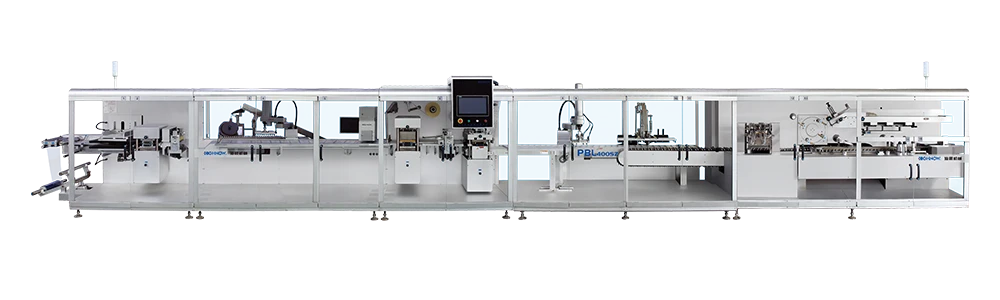
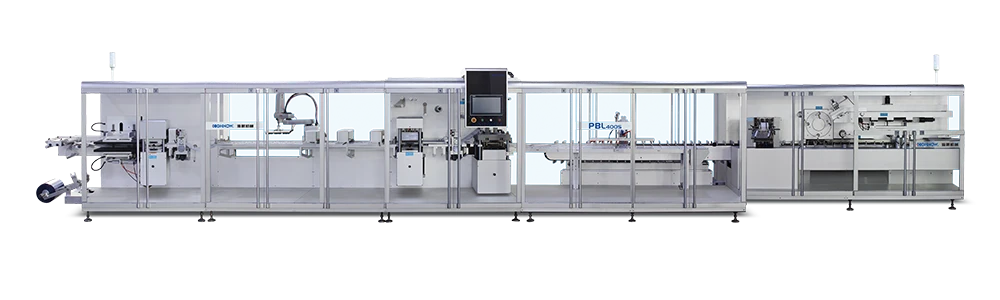
To see how different vial blister line configurations compare in real-world settings, explore the various series designed for specific production volumes and product types.
The Critical Trade‑Offs: Speed, Flexibility, and Compliance
Every vial blister line involves trade‑offs. No single machine excels in all three dimensions simultaneously. The key is to prioritize based on your business strategy.
| Evaluation Dimension | High‑Speed Focus | High‑Flexibility Focus | High‑Compliance Focus |
|---|---|---|---|
| Typical throughput | 300+ blisters/min | 100–200 blisters/min | 150–250 blisters/min |
| Changeover time | 60–120 minutes | 15–30 minutes | 30–60 minutes |
| Product range | Narrow | Wide | Moderate |
| Inspection integration | Basic vision | Advanced vision | Full serialization + 100% inspection |
| Best suited for | Large‑scale commercial production of blockbuster drugs | Contract manufacturing / CMO with diverse client needs | Regulated markets requiring track‑and‑trace |
How to choose:
-
If you have a single high‑volume product with stable demand, prioritize speed and reliability. Downtime is your biggest cost.
-
If you run multiple SKUs and frequent batch changes, invest in quick‑change tooling and flexible feeding systems—even if it means slightly lower peak speed.
-
If you export to regulated markets, ensure the line supports full serialization, 21 CFR Part 11 compliance, and data integrity features. Retrofitting these later is often more expensive than upfront integration.
For a deeper dive into compliance-oriented features, visit our dedicated section on packaging solutions for regulated industries.
Hidden Costs That Impact Your Total Cost of Ownership
Purchase price is just the beginning. The true cost of a vial blister line extends well beyond the initial invoice.
1. Installation and facility preparation
Does your factory have the required electrical supply, compressed air capacity, and floor space? Some lines require dedicated HVAC systems to maintain temperature and humidity within narrow ranges. Include these infrastructure upgrades in your budget.
2. Training and skill ramp‑up
Even the most automated line requires skilled operators and maintenance technicians. Factor in initial training from the supplier, as well as ongoing training as your team turns over. Many suppliers offer remote diagnostics—but assess whether that service is responsive enough for your time zone.
3. Consumables and spare parts
Sealing dies, forming tools, and sensors wear out. Inquire about the typical lifespan of consumable parts and their lead times. A line that requires proprietary, hard‑to‑source parts can cause prolonged downtime.
4. Reject and waste handling
Every rejected blister represents lost product, material, and labor. High‑quality lines with precise forming and sealing reduce reject rates significantly. Over a year, a 2% reduction in rejects can save tens of thousands of dollars in material costs alone.
5. Future upgradeability
Can the line accommodate future requirements—such as new serialization standards, higher speed, or additional inspection modules? Modular designs with servo‑driven stations are easier to upgrade than mechanically linked systems.
5-Step Checklist for Evaluating a Vial Blister Line
Use this practical checklist during your supplier evaluations:
1. Define your product portfolio
List all vial sizes, materials, and blister formats you currently run—and anticipate running in the next 3–5 years. This defines the line's required flexibility.
2. Calculate your peak and average throughput requirements
Based on your production forecasts, determine the minimum sustained speed you need. Add a 15–20% buffer for future growth.
3. Assess your regulatory landscape
Which markets do you supply? The EU's Falsified Medicines Directive and the US DSCSA require serialization at the unit level. Ensure the line can integrate with your serialization software.
4. Run real product trials
Never rely solely on brochures. Send your actual vials, films, and foils to the supplier and witness a full run in their facility—or better yet, have them run a trial at your site. Observe sealing quality, reject rates, and changeover procedures.
5. Evaluate after‑sales support
Ask about response times for remote support, spare parts availability, and local service coverage. A supplier with a strong global footprint can minimize downtime when issues arise.
Actual Application Scenarios
A large‑volume vaccine manufacturer
-
Needs: High sustained speed, minimal changeovers, and full serialization for global distribution.
-
Key priorities: Reliability, low reject rates, and integrated track‑and‑trace.
-
What to look for: A high‑speed line with servo‑controlled feeding, platen sealing, and inline vision for seal integrity and code verification.
A CMO serving multiple pharmaceutical clients
-
Needs: Frequent product changes, wide vial size range, and flexible cartoning options.
-
Key priorities: Quick changeover, modular tooling, and ability to handle both standard and high‑barrier materials.
-
What to look for: A line with quick‑release forming and sealing tools, a flexible feeder that accommodates various container sizes, and a cartoner that supports multiple pack styles.
For customized configurations that address specific production environments, explore how modular vial packaging lines are designed to fit your unique requirements.
Next Steps: From Evaluation to Specification
By now, you should have a clearer framework for evaluating vial blister lines—beyond the headline numbers. The next step is to translate your production needs, regulatory requirements, and future growth plans into a detailed technical specification.
Key areas to include in your specification:
-
Required sustained throughput
-
Vial size range and changeover frequency
-
Material compatibility
-
Inspection and serialization requirements
-
Connectivity with MES/ERP systems
-
Service and support expectations
Once you have a well‑defined specification, you can compare specific models and suppliers against objective criteria. You can review HIGHNOW's vial blister packaging lines, which offer configurations ranging from high‑speed commercial production to flexible CMO applications, and explore how their modular design supports future scalability.
For additional technical resources on packaging line evaluation, read our related guide on thermoforming materials and seal integrity.
Related Reading
-
How Does a Vial Blister Packaging Line Work? – A Step‑by‑Step Guide
-
Thermoforming vs. Cold‑Forming: Which Blister Material Is Right for Your Drug?
-
Understanding Container Closure Integrity for Parenteral Products
-
Serialization Readiness: What to Look for in a Packaging Line
-
Total Cost of Ownership: Comparing High‑Speed vs. Flexible Packaging Lines
This article is part of HIGHNOW's technical content library. No direct sales or pricing information is included. All technical discussions aim to help you make informed purchasing decisions.