English
 Pусский
 Español
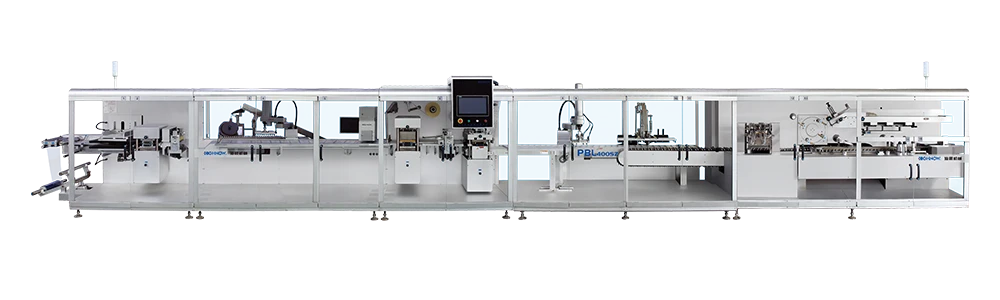
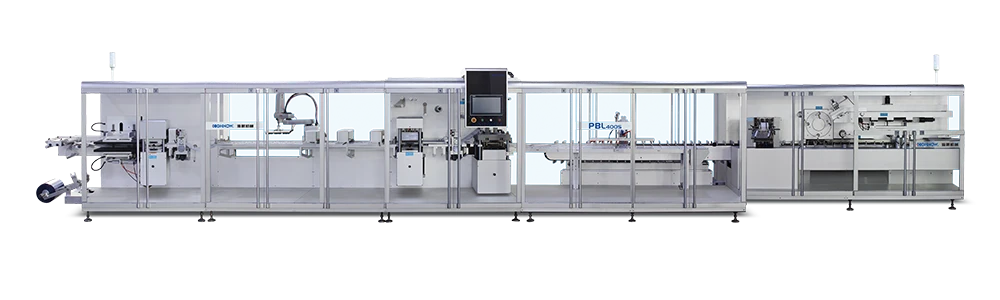
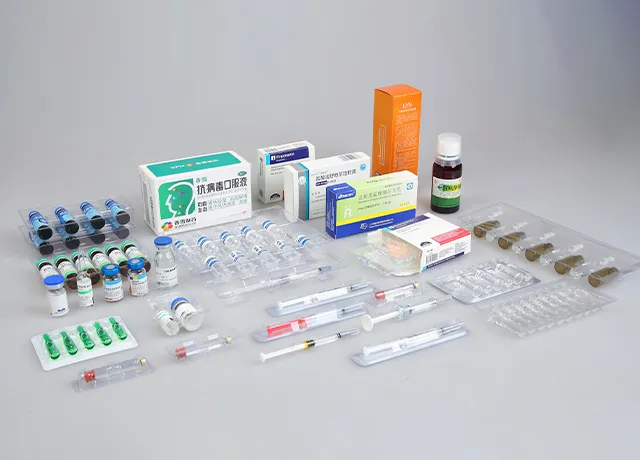
A single undetected 10-micron defect in a vial septum can allow slow microbial ingress over 18 months—invisible to a dye bath, catastrophic at the patient level. For manufacturers of sterile injectables, maintaining container closure integrity (CCI) is not a one-time validation exercise but a continuous, lifecycle-wide quality obligation. Yet many quality teams still rely on legacy testing methods that were designed for a different era of pharmaceutical manufacturing. This guide examines the regulatory framework governing seal integrity, compares the major CCIT methods in terms of sensitivity and applicability, and provides a practical decision framework for matching test methods to your specific container systems and product risks—from vials to Prefilled Syringe Blister Packaging systems where plunger-barrel interfaces present unique sealing challenges.
Why Traditional Seal Testing Falls Short in Modern Pharmaceutical Manufacturing
For decades, blue dye ingress and microbial challenge testing dominated container closure integrity practice. Both methods answer a binary question—did visible dye enter or not?—and both consume the sample. For modern biologics, cell therapies, and high-risk parenterals, that binary answer is no longer sufficient.
The regulatory landscape has shifted decisively. USP <1207>, formally adopted in 2016, is the primary framework governing CCIT in the United States, with EMA and ICH Q10 quality system guidelines aligned to the same principles. Its most consequential position: a clear preference for deterministic, non-destructive testing over probabilistic methods. Where a deterministic method is technically feasible, USP <1207> expects it to be the default choice.
The FDA reinforced this direction in its 2026 draft guidance, which positions CCIT as a critical element in demonstrating that a container closure system is suitable for its intended use throughout the product‘s lifecycle—not just at batch release. The guidance also emphasizes that seal integrity can be transiently compromised during shipping, handling, and extreme storage conditions, making lifecycle monitoring essential.
| Dimension | Deterministic Methods | Probabilistic Methods |
|---|---|---|
| Test Nature | Objective, instrument-based | Subjective, observer-dependent |
| Sample Impact | Non-destructive (preserved) | Destructive (consumed) |
| Output Data | Quantitative leak rates (mbar·L/s) | Qualitative pass/fail only |
| USP <1207> Standing | Preferred where technically feasible | Acceptable only where deterministic is not feasible |
This preference is not arbitrary. FDA Warning Letters have cited insufficient container closure integrity data in NDA submissions as a direct consequence of relying on probabilistic methods alone. The transition from assumption to measurement has become a regulatory expectation, and for pharmaceutical industry applications where product value and patient risk are highest, the choice of testing methodology directly affects both compliance posture and product quality outcomes.

Comparing CCIT Methods: Sensitivity, Applicability, and Trade-offs
Method selection must be driven by package design and product characteristics—not instrument availability. The following table compares the major CCIT methods across the dimensions that matter most for decision-making:
| Method | Type | Sensitivity | Destructive? | Best Suited For | Regulatory Preference |
|---|---|---|---|---|---|
| Helium Leak Detection | Deterministic | Very High (to 10⁻¹⁰ atm·cc/sec) | No | Vials, ampoules, lyophilized drugs, biologics | Highest |
| Laser Headspace CO₂ Analysis | Deterministic | Very High (~0.1 µm) | No | Cold storage applications (down to -80°C) | Highest |
| Vacuum Decay | Deterministic | Moderate (5 µm for rigid containers) | No | Vials, blister packs, prefilled syringes | High |
| HVLD | Deterministic | Moderate (~5 µm) | No | Liquid-filled glass/plastic containers (conductive liquids) | High |
| Dye Ingress | Probabilistic | Low (~20 µm) | Yes | Legacy validation, low-value screening | Lower |
| Microbial Ingress | Probabilistic | Variable | Yes | Container closure validation phase | Lower |
A systematic comparison of physical CCIT methods published in the PDA Journal of Pharmaceutical Science and Technology confirmed that helium leak detection demonstrates the highest detection sensitivity, with vacuum decay and laser-based headspace analysis also performing better than dye ingress.
The “Kirsch limit” of 6×10⁻⁶ mbar·L/s is widely cited as the approximate microbial ingress cutoff, below which the probability of microbial ingress is less than 10%. This threshold provides a science-based acceptance criterion—containers with leak rates below this limit are considered to have acceptable integrity. Some closure systems have demonstrated leak rates as low as 7×10⁻⁸ cm³/s for 13 mm stoppers—two orders of magnitude below the Kirsch limit.
How to choose between these methods based on product characteristics:
-
For liquid-filled vials and prefilled syringes with conductive contents: HVLD offers rapid, automated 100% in-line testing capability, though it is limited to conductive non-lyophilized products without metal components.
-
For lyophilized or powder-filled vials: Vacuum decay is preferred, as it detects gas leaks in dry products without requiring a liquid medium for detection.
-
For ultra-high-value biologics and difficult-to-test products: Helium leak detection provides the highest sensitivity and quantitative leak rate data, though at higher cost and complexity.
-
For cold-chain products stored below -70°C: Laser headspace CO₂ analysis is uniquely suited, as it can detect leaks in containers at temperatures as low as -80°C.
-
For high-volume routine production: Vacuum decay supports full automation for at-line or 100% inspection.
Root Causes of Seal Integrity Failure: What Quality Teams Often Overlook
Understanding how and why seals fail is the prerequisite for building an effective control strategy. Seal integrity failures originate from several distinct sources, and each demands a different mitigation approach.
Source 1: Capping Process Variability
The vial capping process is a critical unit operation that can generate cosmetic defects or affect container closure integrity. Research published in the PDA Journal of Pharmaceutical Science and Technology found that different capping equipment settings led to residual seal force values ranging from 7 to 115 N—a 16-fold variation. Higher residual seal force values were achieved with high capping pre-compression force and a short distance between the capping plate and plunge. This means that capping equipment settings are not merely an operational preference—they are a direct determinant of seal quality. Without validated capping parameters and in-process monitoring of sealing force, manufacturers risk producing vials that pass visual inspection but fail leak testing.
Source 2: Elastomeric Component Degradation
Rubber stoppers and septa are susceptible to chemical attack from environmental factors. Research confirmed that ozone attack is the root cause of septum cracking during storage, and the stress—resulting from crimping on the glass cartridge by the aluminum lined seal—made the septum particularly vulnerable to ozone attack. Rubber hardening due to storage conditions can also reduce sealing effectiveness over time.
Source 3: Ultra-Low Temperature Storage Effects
For products requiring ultralow (below -70°C) or cryogenic (below -150°C) storage, the elastomeric components undergo significant property changes. Research on prefilled syringes at ultracold temperatures identified loss of contact at the rubber-glass interface as the dominant failure mode, with plastic “freezing” of deformation leading to CCI failure below -70°C. Similar studies have confirmed that CCI failure in prefilled syringes consistently occurs below this temperature threshold, with the primary failure mode being the plunger-to-barrel interface.
These findings have direct implications for cartridge-based packaging solutions and prefilled syringe systems destined for cold-chain distribution. Manufacturers must re-engineer elastomeric materials and sealing strategies for reliable performance under ultra-low temperature conditions.
Building a Lifecycle CCIT Control Strategy
USP <1207> organizes integrity assurance across three product lifecycle phases: package development, routine manufacturing, and shelf-life stability assessment. The ECA’s 2025 Position Paper on CCIT Testing (Version 3.0) further defines a lifecycle control strategy that integrates qualification/validation, routine controls, supplier management, and stability studies.
The following five-step framework provides a practical sequence for building a lifecycle CCIT strategy:
Step 1: Classify the Container System
The first step is determining whether the container is fusion-sealed or mechanically closed. The ECA Position Paper clearly differentiates between fusion-sealed containers (e.g., ampoules, BFS/FFS units), which require 100% integrity testing, and mechanically closed systems (e.g., vials and prefilled syringes), where integrity assurance is achieved through validated process controls and risk-based CCIT sampling.
Step 2: Define the Maximum Allowable Leakage Limit (MALL)
The MALL is the smallest leak rate that could compromise product quality. For rigid containers where maintenance of headspace content is not critical, the Kirsch limit of 6×10⁻⁶ mbar·L/s is a commonly used reference threshold. However, the MALL is product-specific—products sensitive to oxygen, moisture, or microbial ingress may require more stringent limits.
Step 3: Select a Deterministic Method Matched to Container and Product
Method selection must balance sensitivity, non-destructiveness, applicability to the specific container geometry, and compatibility with product characteristics. The table above provides a starting point, but the final selection should be justified by container-specific validation studies.
Step 4: Validate the Method with Artificial Defects
Positive control samples with known defect sizes (e.g., laser-drilled micro holes or capillary leaks) should be used to demonstrate that the method can reliably detect leaks at or near the MALL. Research has shown that method sensitivity cannot be compared by leak diameter alone—it requires consideration of multiple impacting factors including path length and uniformity.
Step 5: Deploy Sampling Plans and In-Process Controls
For mechanically closed systems, the ECA recommends that sampling frequency and sample size be scientifically justified, typically applying statistical sampling plans such as ISO 2859 (S3/S4) for destructive CCIT methods. For non-fusion-sealed containers such as vials and prefilled syringes, validated CCIT methods should be applied within the stability program to confirm integrity over shelf life, while 100% testing at batch release remains unnecessary if a robust control strategy is in place.
Real-World Application: High-Value Biologics and Difficult-to-Test Products
The challenges of seal integrity testing become most acute for “difficult-to-test” parenteral products (DTPs)—innovative modalities such as antibody-drug conjugates (ADCs), radiopharmaceuticals, and cell and gene therapies, as well as ultrahigh-concentration monoclonal antibody suspensions.
These products present unique CCI challenges because of toxicity, biohazard or radioactivity, very small batch sizes, high cost, fragility, or requirements for ultralow (below -70°C) and cryogenic (below -150°C) storage.
Consider a representative case: a small-volume (0.5 mL) aqueous gene-therapy product filled into 2 mL plastic vials with rubber closures and aluminum crimps, stored long-term at below -70°C, and produced in batches of approximately 200–500 units. The conventional approach—conducting CCIT on the final drug product—is impractical for several reasons: sample quantities are limited, the product is hazardous to handle, and standard test methods may not be validated for the extreme storage conditions.
Industry experts propose a holistic approach that decouples CCI assurance from constraints imposed by scarce or hazardous drug product. By leveraging surrogate-filled or empty container closure systems, sensitive CCIT methods can be applied without consuming valuable drug product, preserving safety, operational feasibility, and regulatory compliance across development and commercial stages.
For products requiring ultra-low temperature storage, the use of empty or surrogate-filled containers allows manufacturers to evaluate the impact of thermal cycling on seal integrity without exposing drug product to repeated freeze-thaw stress. This approach also enables the use of highly sensitive but potentially intrusive methods—such as helium leak detection—that would otherwise be impractical with limited, high-value batches.
Next Step: From Testing Framework to Equipment Selection
Understanding the regulatory framework and method selection criteria is the first step toward building a compliant and effective CCIT program. The next logical step is evaluating how these testing principles translate into equipment and process design decisions—particularly for cartridge-based systems and other container formats where sealing parameters must be validated as part of the overall production strategy.
Once you have clarified your container system, product sensitivity profile, and required MALL, comparing the specific capabilities of available packaging solutions becomes the next logical step. You can review HIGHNOW‘s Automatic Cartoning Machine for high-volume scenarios requiring integrated quality controls, or explore blister packaging solutions designed with lifecycle quality assurance in mind.
Related Reading
-
Leak Testing Methods for Vial Blister Packages: A Guide to Seal Integrity Testing
-
How to Validate Container Closure Integrity for Prefilled Syringes: Methods, Challenges, and Best Practices