English
 Pусский
 Español
Trying to pick between inline and rotary vial blister equipment without knowing which one kills your changeover time is like choosing a vehicle without checking if you need a trunk for lumber or a backseat for car seats. Packing Production Line decisions are rarely about which machine looks flashier—they’re about which configuration actually stays running when your batch sizes keep shrinking and your SKUs keep multiplying. So here’s what you actually want to know: if you run high-volume, continuous production with minimal product changes, a rotary blister packaging machine delivers blistering speeds (yes, pun intended). But if your operation juggles multiple vial formats, short runs, or cramped floor space, an inline blister line will save you from the downtime nightmare that rotary machines quietly hide behind their impressive output numbers.
Let me be blunt: I’ve watched plant managers fall in love with a rotary machine’s spec sheet only to discover six months later that every format change costs them half a shift. The industry doesn’t talk enough about this trade-off, so let’s walk through the real-world pros and cons.
How Each Machine Actually Moves
The Straight-Line Player: Inline Blister Equipment
An inline vial blister machine moves containers along a single straight conveyor belt, filling or sealing them sequentially or in small groups. Think of it as a production line where each station does its job one after another—forming pockets, loading vials, sealing, punching. The motion is usually intermittent: the blister sheet moves, stops, gets worked on, then moves again.
What this means for you: slower peak speeds, but way more control during each stop. Because the blister sheet sits still during sealing, you get more consistent seal quality—critical for parenteral products where a leak is a recall waiting to happen.
The Carousel: Rotary Blister Systems
A rotary vial blister machine uses a circular turret with multiple stations arranged around a central axis. The machine rotates continuously while molds move in sync with roll-fed film, allowing simultaneous operations—filling on one side, sealing on another, punching somewhere else. This continuous motion is why rotary systems hit speeds exceeding 600 blisters per minute in pharmaceutical applications.
Speed vs Agility: The Real Trade-Off
Let’s put numbers on the table.
| Factor | Inline System | Rotary System |
|---|---|---|
| Peak Throughput | Up to 120 CPM | 600–750+ blisters/min |
| Changeover Time | Fast (often <30 min) | Slower (tooling swaps take longer) |
| Floor Space | Compact footprint | Larger footprint |
| Maintenance Needs | Lower | Higher |
| Initial Cost | Lower | Higher |
| Flexibility | High—handles various vial sizes | Lower—dedicated to specific formats |
Source: Industry comparison data from packaging equipment benchmarking
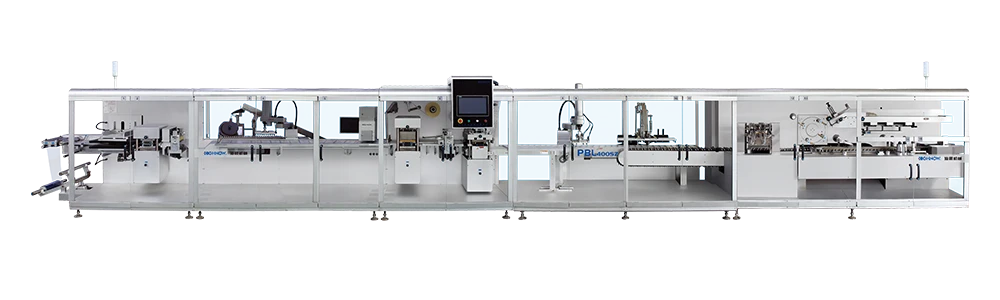
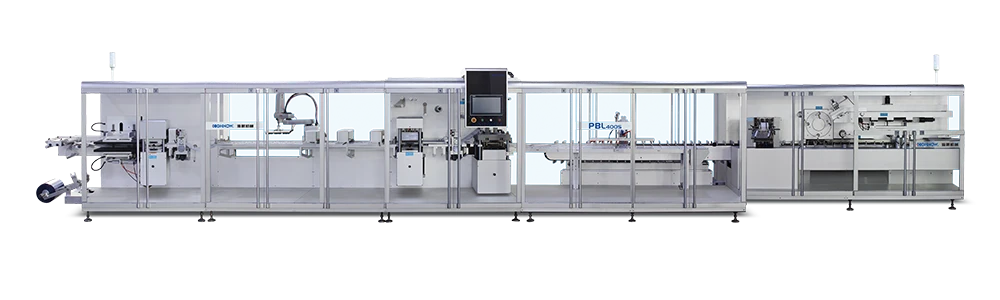
A rotary machine is the undisputed king of raw speed. The HIGHNOW hits 600 blisters per minute in double-lane configuration, and a three-lane version pushes 750 blisters per minute. HIGHNOW, specifically designed for parenteral products like vials and syringes, delivers 400 blisters per minute.
But here’s where my skepticism kicks in. That blister-per-minute number only matters if you actually run the machine at that speed for most of your shift. If you’re a contract packer switching between 2R, 6R, and 10R vials three times a week, your effective throughput collapses every time you stop to change tooling. I’ve seen facilities where rotary changeovers eat 30–45 minutes per format swap, and if you’re doing that twice a day, you’ve just lost an entire production hour.
Inline systems, by comparison, trade speed for changeover agility. Because the machine moves intermittently and stations are more accessible, rail adjustments and format part swaps happen faster. Some modern inline designs let a single operator complete a full format change in under 30 minutes without tools.
What Nobody Tells You About Sealing Quality for Vials
Vials present a unique challenge that most blister packaging discussions completely ignore. Unlike tablets or capsules that simply drop into pre-formed cavities, vials require deep-draw forming—blister pockets deep enough to hold a small glass or plastic container upright.
A deep-draw blister machine can form cavities up to 28–40 mm deep, depending on the system. This matters because deeper draws put more stress on the forming material and increase the risk of pinhole leaks or inconsistent wall thickness.
Here’s where the two technologies diverge in a way that actually matters for product safety.
Rotary systems with continuous motion sealing maintain consistent temperature and pressure across the sealing station because the material never stops moving. This can be an advantage for high-volume runs where you’re sealing thousands of identical vials per hour.
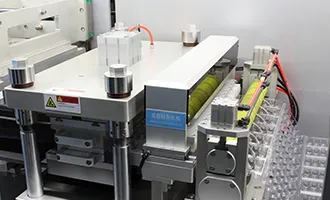
But inline systems with platen sealing have a distinct advantage for complex or variable products. Because the blister sheet comes to a complete stop during the sealing cycle, the sealing head can apply uniform pressure across the entire forming area. For vials with irregular neck shapes or child-resistant lidding materials that demand precise sealing parameters, that stationary dwell time makes a measurable difference in seal integrity.
I’ve spoken with quality assurance managers who swear by platen sealing for high-value biologics precisely because the consistency is more predictable. Your mileage may vary, but don’t let a salesperson tell you rotary sealing is universally superior.
The Layout Reality Check
Here’s where your facility’s physical constraints might make the decision for you.
An inline blister packaging line has a linear footprint—long and narrow. If your production floor has a corridor-style layout or you’re fitting equipment against a wall, inline integrates cleanly. The trade-off is that operators may need to walk between the infeed and discharge ends, which can add labor steps.
A rotary blister packaging system has a compact, square footprint. A single operator can typically load containers and monitor discharge from one standing position, which reduces walking and improves line-of-sight monitoring. The HIGHNOW line, for example, combines blistering and cartoning in a compact modular design specifically optimized for space-constrained cleanrooms.
But here’s the nuance: rotary’s compact footprint often comes with tighter access to internal components during maintenance. Inline machines, because they’re spread out, usually offer better physical access to critical areas for cleaning and repairs. If you’re in a regulated environment with strict GMP cleaning protocols, that accessibility difference adds up fast.
Where Customization Actually Matters
Standard machines are fine for standard products. But vials come in 2R, 6R, 8R, 10R, 20R—the list goes on. And if you’re handling anything beyond cylindrical glass, like Luer-lock syringes or ampoules with irregular profiles, you need equipment that adapts without requiring a complete retooling.
Some custom blister equipment solutions address this through modular design approaches. A modular blister line allows you to swap out specific stations—feeder, forming, sealing, punching—rather than recalibrating the entire machine.
What I’ve learned from watching pharma packagers scale up is this: buy for the product you’ll be running in three years, not the one you’re running today. If your pipeline includes multiple vial sizes or novel container geometries, prioritize equipment with demonstrated format flexibility over raw speed. The machine that runs 600 blisters per minute but can’t handle your next product is a very expensive paperweight.
For applications requiring deep-draw thermoforming for vials, ampoules, and syringes, specialized equipment exists that bridges the inline-rotary gap.
The Maintenance and Compliance Angle
Let me share an observation that rarely makes it into comparison charts: rotary systems have more moving parts. More stations, more cam-driven mechanisms, more synchronization points. That translates directly to higher maintenance requirements and more potential failure modes.
Inline systems, by contrast, are mechanically simpler. Fewer moving parts means fewer things to break, lower spare parts inventory, and maintenance tasks that in-house technicians can usually handle without specialized training.
From a regulatory compliance standpoint, both technologies can meet cGMP requirements when properly validated. But the validation effort differs. Rotary machines require more extensive qualification of the continuous motion sealing parameters because temperature and pressure profiles are harder to stabilize across a rotating interface. Inline platen sealers, with their stationary sealing cycle, tend to be more straightforward to validate and requalify after maintenance.
When the “Packing Production Line” Choice Gets Complicated
Here’s where I’ll offer a different perspective from the usual “just compare the specs” advice.
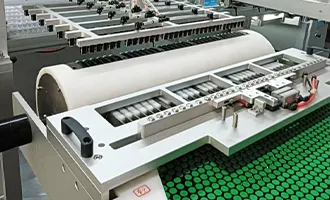
A packing production line isn’t just about the blister machine in isolation. It’s about how that machine integrates with your upstream filling operation and downstream cartoning. I’ve seen beautiful rotary blister lines fail operationally because the vial infeed couldn’t keep up, or because the cartoner wasn’t matched to the blister output.
A truly effective packing production line requires holistic line integration—matching speeds between the blister machine, cartoner, and serialization equipment. The HIGHNOW, for example, is designed as a monobloc where blister output (600/min) is synchronized with cartoning speed (350 cartons/min). That kind of integration matters more than any single machine specification.
If you’re running high-volume, low-mix production with predictable vial formats, a rotary system will maximize your throughput and likely deliver the best ROI. The global blister packaging equipment market is projected to reach $4.1 billion by 2030, driven largely by high-speed rotary demand in large-scale pharma manufacturing.
But if your operation looks anything like contract packaging—frequent format changes, varied vial sizes, short production runs—an inline blister packaging line will probably outperform a rotary system on overall equipment effectiveness (OEE) despite the lower peak speed. Because OEE isn’t about how fast you run when everything’s perfect. It’s about how much good product you actually ship at the end of the shift.
The Bottom Line: Match the Machine to Your Reality
Stop obsessing over blister-per-minute numbers. Start asking these questions instead:
-
How many format changes per week? If it’s more than two, lean toward inline flexibility.
-
What’s your ceiling on maintenance expertise? Rotary demands more specialized technical support.
-
How tight is your cleanroom footprint? Rotary wins on floor space density; inline wins on access.
-
Are you sealing standard vials or complex geometries? Platen sealing (inline) offers better consistency for irregular shapes.
-
What’s your batch size range? Under 50,000 units per batch? Inline’s faster changeovers will likely improve your effective throughput.
The right blister packaging solution exists for every production profile. Some facilities genuinely need the blistering speed of rotary equipment. Others will find that an inline machine’s changeover agility and maintenance simplicity deliver better real-world performance.