English
 Pусский
 Español
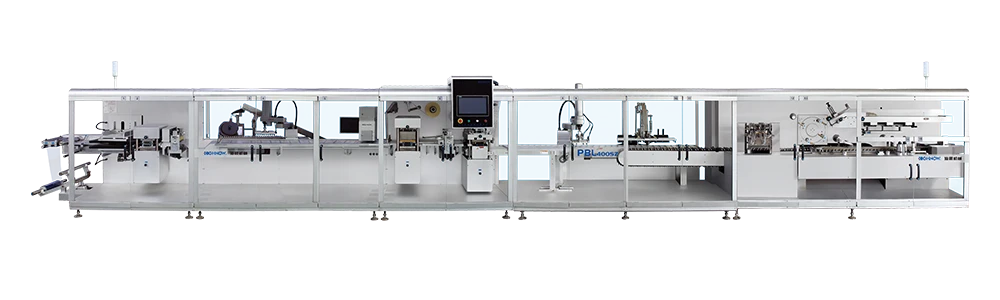
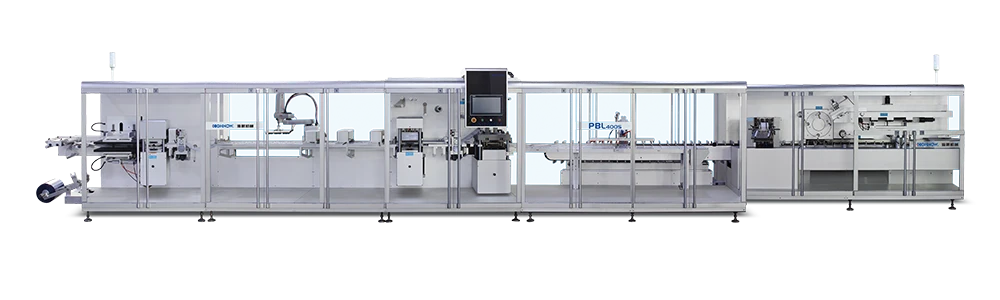
If you're comparing a High-Speed Vial Blister Machine against a standard model, stop counting cycles per minute first. The real answer most buyers need is this: Will it run my 2ml vials without jamming every 12 minutes? Because speed doesn't matter when you're clearing bent aluminum foil from forming stations. The honest truth? Standard machines handle vial diameters below 15mm just fine up to 40 cycles. High-speed units only earn their keep above 70 cycles—and with servo-controlled indexers. Anything in between is marketing noise.
Why Standard Thermoformers Surprise You (In a Bad Way)
Let's walk through a real Tuesday. You're packaging 2ml clear glass vials for an antibiotic line. Your standard blister packaging machine uses a mechanical cam indexer. At 35 cycles per minute, it's beautiful. You push to 42—the forming station starts missing registration pins. Vials tilt. Seals fail. By 50 cycles, you're rejecting 15% of every batch.
Here's what happened: mechanical drives lose positional accuracy as torque fluctuates. A servo-driven blister line holds ±0.2mm regardless of speed. That's not a luxury; that's the difference between a 98% yield and a 82% yield. According to a 2023 PDMA survey on pharmaceutical packaging uptime, indexing accuracy is the #1 hidden cause of vial sealing failures—not temperature, not dwell time. Buyers chase heat parameters while ignoring the cam wear that's throwing everything off.
The "Dwell Time Deception" Nobody Talks About
Every supplier boasts about forming speed. Few mention cooling time. For vials—especially larger 10ml to 20ml sizes—the blister pocket needs to rigidify before the vial is inserted. If your machine doesn't have active cooling (fans or water channels) after the forming station, you're waiting 3–4 seconds per cycle anyway. That kills "high speed" instantly.
A standard vial thermoformer without active cooling maxes out around 30 cycles on deep-draw vials. A high-output blister system with pinned chain transport and zone-controlled cooling can hit 80 cycles on the same material. But here's my personal take after visiting 20+ packaging lines: 90% of buyers don't need 80 cycles. They need 50 cycles reliably, with quick tooling changeovers between vial sizes. That's where modular design beats raw speed every time.
Your Floor Plan Might Kill "High Speed" Before You Start
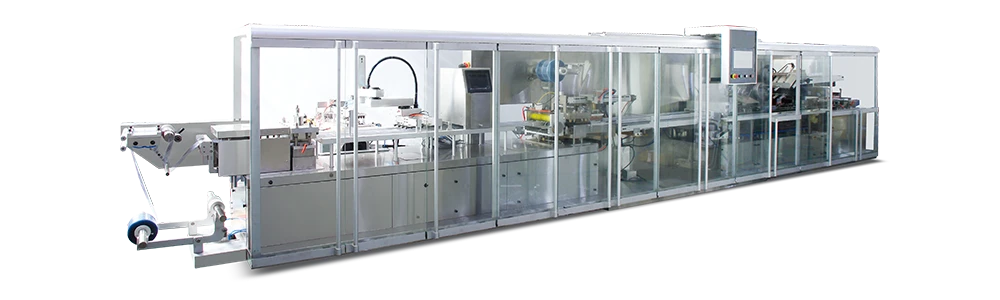
Here's an emotional one. I watched a mid-sized contract packager spend $220,000 on a rapid blister packaging line—then discover it needed 4 feet of extra clearance for the discharge chute and a downstream cartoner that didn't fit through their doorframe. They ran it manually for six months. Painful.
Before you admire cycle rates, measure three things:
-
Infeed height for vial unscramblers (standard: 36 inches; high-speed often 44+).
-
Operator access to forming and sealing stations (high-speed servo units often require rear access for maintenance—is your wall there?)
-
Downstream integration—a fast blister line without an automatic cartoning machine just piles rejected blisters faster.
The 50-Cycle Wall: When to Actually Upgrade
Let me give you a decision rule from real P&L statements:
-
Below 50 cycles per minute: A good standard blister machine with servo indexing (not mechanical cam) will do everything you need. Spend your extra budget on quick-change tooling and vision inspection.
-
Above 70 cycles: You need a dedicated high-speed platform with independent forming and sealing stations, active cooling, and a linear servo motor (not rotary cam).
-
In between (50–70): This is the danger zone. Many so-called "high-speed" machines use the same frame as standard units, just overdriven. They'll run 60 cycles for six months—then the cam follower bearings fail. Ask for mean cycles between maintenance (MCBM) data. If they can't provide it, assume 200,000 cycles.
A true High-Speed Vial Blister Machine is designed from the ground up for 300+ cycles per minute on small vials (1-5ml), but that's overkill for 90% of labs. For most pharmaceutical blister lines running 10ml vials, the sweet spot is a servo-controlled, medium-speed platform (55-65 cpm) with cooled forming dies. That combination gives you 95% of the output at 60% of the high-speed price.
What HIGHNOW Does Differently (And Why It Matters for Vials)
Most blister machine suppliers sell the same forming film thickness range (150-300 microns) for every application. Vials are different. The pocket depth for a 15mm vial is three times deeper than for a tablet. That means film thinning becomes critical. We add plug assist (a mechanical helper that pushes film into the deep cavity before vacuum forms it) as standard on any line running vials over 10mm tall. Many brands call that an "upgrade." We call it "not failing."
We also learned the hard way that vial orientation at the infeed matters more than blister speed. A staggered infeed wheel (pre-separating vials before the pickup head) reduces jams by 70% compared to a simple slide gate. It's a small detail that saves 4 hours of weekly cleanup.
When a Blister Line Isn't Even Your Best Option
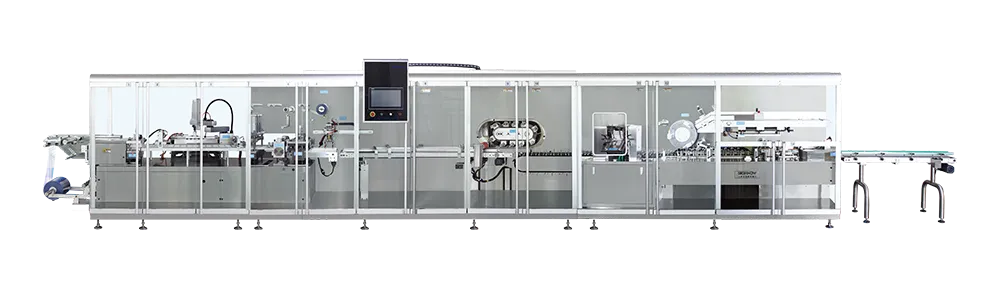
Let me be blunt: for very small batches (under 20,000 vials per shift) or frequent size changes (every 2 hours), a semi-automatic blister press with manual loading might beat any automated line. Speed isn't free. Every automated station—infeed, forming, sealing, perforation, discharge—adds changeover time. A high-speed line might take 90 minutes to switch from 2ml to 10ml vials. A modular semi-auto unit takes 15 minutes.
So who actually needs high-speed vial blister packaging?
-
Contract packagers with long runs (millions of units)
-
Large pharma with dedicated lines per product
-
Generic drug manufacturers running the same vial size for years
If that's not you, save your capital. Buy a reliable medium-speed servo machine and invest the difference in leak testers and serialization printers. Those will save you more money than 20 extra cycles per minute.
The Changeover Test: Ask This Before Signing Anything
Here's my final, practical test. Ask the supplier: "Show me a video of your machine switching from 5ml to 15ml vials, including forming tool change, infeed adjustment, and sealing temperature re-calibration." Time it.
-
Under 45 minutes: Professional design with quick-release tooling and recipe storage.
-
45–90 minutes: Average. Acceptable for dedicated lines.
-
Over 90 minutes: Walk away. That machine will dominate your maintenance schedule.
HIGHNOW builds tooling carts that pre-align forming and sealing dies outside the machine. Changeover is a 20-minute job, including vial size recipes.
Final Call: Match Speed to Your Real Bottleneck
Don't let a glossy brochure sell you 100 cycles when your vial unscrambler only feeds 55. Don't buy a standard machine if you're planning to add serialization (which adds 0.5 seconds per blister). Map your entire line—unscrambler, blister, cartoner, case packer. The slowest station wins. Often, that's not the blister machine at all.