English
 Pусский
 Español
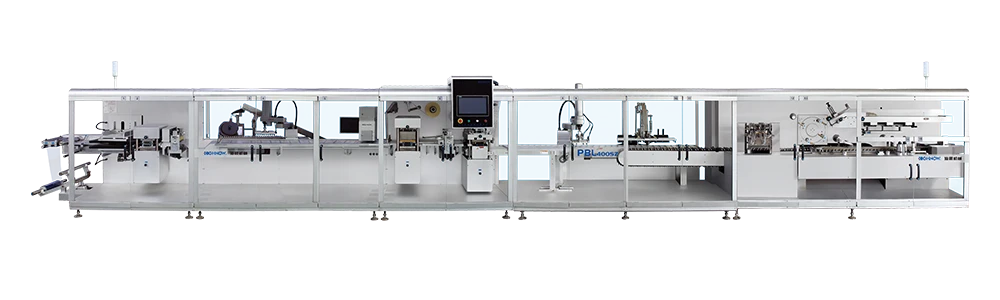
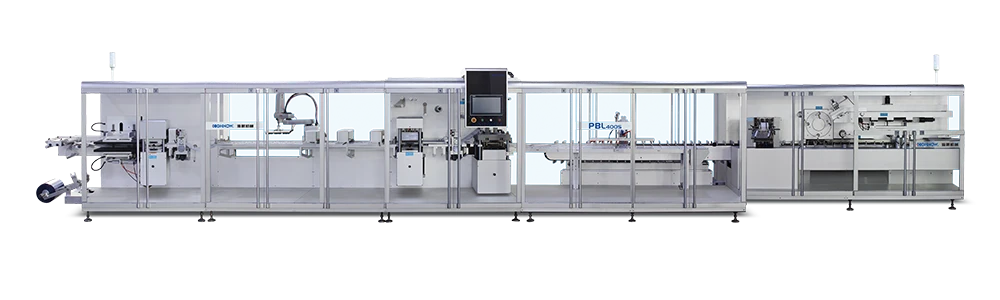
If you’ve ever wondered how vaccine vials or injectable drugs get packed into those neat individual blisters, you're looking at a vial blister line. It’s an integrated packaging system that forms plastic cavities, loads glass vials, seals them with foil or film, and often feeds finished blisters straight into cartons—all in one continuous flow. Pharma manufacturers choose this setup not because it’s trendy, but because it solves a brutal reality: every gram of moisture that sneaks through a seal can ruin an entire batch. And when you're packing thousands of vials per shift, manual handling isn’t just slow—it's a contamination risk you can’t afford.
The Anatomy of a Parenteral Blister Packing System
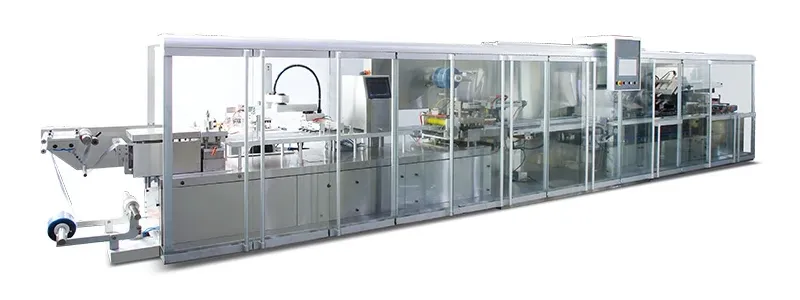
Let me walk you through what actually happens inside one of these machines, because the sequence matters more than most people think.
First, a roll of thermoforming material—often PVC, PET, or high-barrier laminate—feeds into a heating station where it softens enough to be drawn into a mold. Depending on the material type, the forming can be done with compressed air (for standard PVC), air-and-plug assist (for tricky plastics), or mechanical dies if you're working with aluminum. Cold forming is a completely different animal: no heat involved, just pressure that pushes the material into shape, resulting in blisters that are roughly 2.5 to 3 times larger in volume than thermoformed ones. That extra space matters when you’re dealing with larger vial sizes.
Once the blister cavities are formed, the vial loading stage kicks in. A servo-controlled feeder gently guides vials onto a track, distributes them evenly, and uses a robotic pick-and-place system to lower each vial precisely into its pocket. I’ve seen lines that achieve speeds of up to 520 blisters per minute while maintaining placement accuracy within a fraction of a millimeter. That’s not magic—it’s closed-loop servos and vision systems working in sync.
Then comes the sealing process, which is where good lines separate from bad ones. The lidding material—aluminum foil, Tyvek, or coated paper—is rolled over the filled blister, and heat and pressure bond it to the flange. A common but costly headache here is incomplete sealing caused by incorrect temperature settings, uneven pressure distribution, or worn sealing dies. If the seal fails, you're looking at product contamination, shorter shelf life, and regulatory non-compliance.
Finally, the sealed blister strip moves to a die-cutting station, where individual blister cards or multi-packs are punched out. Some lines integrate a transfer robot that picks blisters and feeds them directly into a continuous-motion cartoner. Others use conveyor-based transfer systems designed to operate without energy-intensive vacuums, achieving energy savings of up to 45% compared to older designs.
Why Pharma Manufacturers Are Moving Away from Traditional Vial Storage
For decades, the default solution for storing injectable drugs was simple: drop the vials in a tray, wrap the tray in shrink film, and call it a day. That still happens. But the industry has quietly started shifting, and the reasons are more practical than you might expect.
Traditional vial trays offer minimal barrier against moisture and oxygen. A standard PVC blister allows about 0.3 g/m²/day of moisture transmission if uncoated—fine for dry tablets, disastrous for sensitive biologics. By contrast, cold-formed aluminum blister packs can bring that number down to near-zero while providing complete light and gas protection. Some pharmaceutical packaging markets now exceed USD 23 billion annually, driven largely by demand for unit-dose patient safety packaging and regulatory mandates like the Drug Supply Chain Security Act, which requires enhanced traceability all the way down to the individual dose level.
Then there’s the recall nightmare. If a batch of vials in trays has a quality issue, you might need to pull thousands of individual units from distribution—each one manually checked, repackaged, or destroyed. Blister-packed vials allow track-and-trace serialization at the unit level, meaning you can pinpoint affected lots and recall precisely what needs to be recalled.
But let’s be honest: traditional tray packaging isn’t going away completely. It still dominates for standard liquid injectables in high-volume settings where capital equipment budgets are tight, and where the regulatory burden for child-resistant or tamper-evident features is lower. The real cost, however, is often hidden in product loss during transit—cracked vials, degraded seals, and rejected batches—expenses that never appear on the initial equipment quote but eat margins month after month.
Thermoforming vs. Cold Forming: Which One Actually Fits Your Product?
This is where the technical debate gets interesting, and where many procurement teams make avoidable mistakes.
Thermoforming heats plastic film until it's pliable, then uses vacuum or pressure to shape it around a mold. It's fast, relatively cheap, and works beautifully for standard vials that need modest protection. But the heat can degrade sensitive drug residues left on vial surfaces if cleaning protocols slip, and thermoformed cavities offer less structural rigidity than their cold-formed counterparts.
Cold forming, on the other hand, uses pressure rather than heat to push aluminum laminate into shape. The resulting blisters are mechanically stronger, offer superior barrier performance, and don't risk heat-induced degradation. The trade-off? Cold-formed blisters are bulkier—about 2.5 to 3 times larger in volume—so you'll fit fewer units on a pallet. And the forming speed is generally slower, which matters if you're pushing for 400+ blisters per minute.
So which one should you pick?
If your vial contains moisture-sensitive biologics, vaccines, or any drug with stability issues, don't cut corners—go with cold forming. The slightly higher per-unit packaging cost is trivial compared to a batch discard worth hundreds of thousands of dollars. If you're packaging stable oral syrups or basic saline solutions, thermoforming is fine. Just make sure your sealing parameters are validated, because even the best forming won't save you from a bad seal.
Integration Matters More Than Raw Speed
Here's something equipment brochures won't emphasize: a fast line that jams every two hours is slower than a medium-speed line that runs flawlessly all shift. I've watched plant managers chase top speeds like it's a sport, only to discover that their overall equipment effectiveness (OEE) is bleeding out on changeovers, reject handling, and unscheduled downtime.
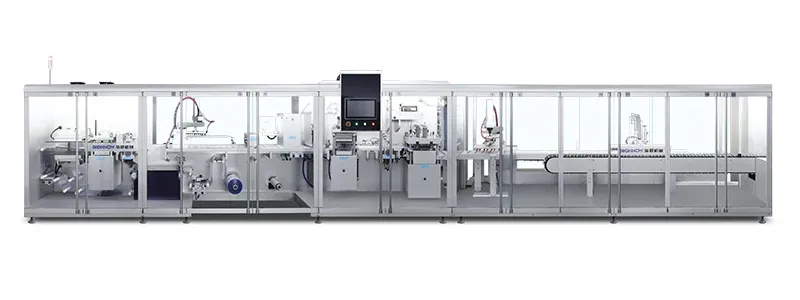
The smart lines being deployed today focus on modular integration—blister machines that talk directly to cartoners, vision systems that catch missing vials before sealing, and format changeovers that take minutes instead of hours. Some systems now feature tool-less changeover with quick-release parts, drastically reducing the downtime required to switch between vial sizes or blister formats. That’s the kind of design that actually saves money, not the one that tops some brochure's blister-per-minute number.
For manufacturers dealing with multiple SKUs or contract packaging work, changeover flexibility isn’t a luxury—it's a necessity. A compact monobloc design that connects blistering and cartoning through an integrated transfer station, for instance, can process different vial types without major reconfiguration. When I consult with mid-sized pharma companies, this is consistently the feature they underestimate until they've lived with a rigid line for six months.
Addressing the Quality Nightmares That Keep Production Managers Awake
Let me share a story from a facility I visited last year. They were running a vial blister line that looked fine on paper: good speed, reasonable price, decent spec sheet. But three months in, their reject rate hit 8 percent. The cause? Progressive wear on the sealing die that created micro-leaks detectable only by vacuum decay testing.
Nobody caught it because their inspection system only checked for vial presence, not seal integrity. By the time they figured it out, they'd shipped 15,000 borderline units. That’s the kind of expense that makes C-suites suddenly very interested in packaging budgets.
Common pitfalls include:
-
Uneven heating during forming, leading to inconsistent cavity depth and poor vial fit
-
Static charge accumulation that attracts contaminants from the surrounding environment
-
Web walking—lidding material that drifts sideways as it feeds, creating off-registration seals
-
Cracking at tight folds in cold-formed pockets, especially with high-pressure sealing dies
The fix isn't always buying more expensive equipment. Sometimes it's about sealing temperature validation, die maintenance schedules, or adding active static neutralization. But if your existing line lacks these adjustment capabilities—or if you’re still feeding vials by hand—then upgrading to a properly integrated automated system might actually be the cheaper path when you factor in reduced rejects, lower labor costs, and fewer sleepless nights.
The Rise of Automated Vial Blister Packaging Systems
This is where automated packaging solutions have quietly become a practical alternative to traditional methods. A fully integrated blister packaging machine for pharmaceutical vials combines forming, vial loading, sealing, punch-out, and cartoning into one streamlined workflow.
Compared to a semi-automatic setup—where an operator might manually feed vials into a separate sealing station—automated lines reduce human intervention dramatically, cutting contamination risk and stabilizing throughput. But let’s be clear: automation isn’t a magic bullet. The total cost of ownership includes installation, training, maintenance, and spare parts. A high-end automated system with integrated vision inspection, serialization, and multi-lane capacity can cost anywhere from $100,000 to over $200,000 depending on configuration and compliance level. That’s a real number, and it’s not for every startup.
Where automation wins is in repeatability and data capture. Every sealed blister can be inspected by cameras that confirm vial presence, verify print quality, and flag battery codes or expiration dates. Some systems integrate leak detection using ASTM F3169 vacuum deflection testing, a standard method that measures surface deflection under applied vacuum to detect micro-leaks too small for visual inspection. You can’t get that level of quality assurance from a manual packing bench.
Some suppliers are also moving toward serialization-ready architectures that comply with track-and-trace mandates from day one. The EU Falsified Medicines Directive, for instance, requires unique identifiers and tamper-evident seals for many prescription products—features that are far easier to implement on an integrated blister line than retrofitted to an older tray-based operation.
How to Choose What Works for Your Volume and Budget
If I were sitting across from you right now, helping you spec out a vial packaging solution, here's what I’d ask:
First: what’s your monthly vial throughput? Under 50,000 units? A semi-automatic blister packer with manual loading might be fine—and could cost as little as $5,000 to $15,000. Above 200,000 units? Manual handling becomes a bottleneck and a liability. At that scale, the labor hours alone often justify an automated line.
Second: what’s your product’s stability profile? High moisture sensitivity? Unstable at elevated temperatures? You need cold forming and premium lidding materials, not the cheapest thermoformable film.
Third: who’s your regulator? DSCA, FMD, or similar mandates? If yes, serialization isn't optional—and your line needs to be ready for it out of the box.
For manufacturers producing 1 million or more vials per month, a continuous-motion blister packaging line with automated cartoning and inline inspection is the standard choice. You'll pay more upfront—often $250,000 to $500,000 for fully integrated systems—but the cost per pack drops significantly, and compliance becomes something you measure, not something you hope for.
One more thing: don’t underestimate the cost of floor space. A compact, modular design that combines several stations into a smaller footprint can save you tens of thousands of dollars annually in cleanroom real estate—especially if you’re operating in high-rent pharmaceutical hubs like Boston, San Francisco, or Singapore.
Final Thoughts
The packaging choices you make today will either create a competitive advantage or become a source of recurring pain. I've seen both sides. The facilities that moved early to integrated vial blister lines didn't do it because machine salespeople wowed them. They did it because they couldn't afford the hidden costs of manual handling, seal failures, and scattered track-and-trace systems anymore.Whether you’re upgrading from trays or building a new production line from scratch, take the time to match the technology to your actual product needs—not just to a brochure's speed claim.