English
 Pусский
 Español
Ampoules and cartridges are among the most demanding primary packaging formats in pharmaceutical manufacturing. Ampoules—small sealed glass capsules containing a single dose of injectable medication—are fragile, lightweight, and prone to tipping. Cartridges, commonly used for dental anesthetics and other injectable drugs, require precise handling to maintain container closure integrity.
Packaging these containers in blister format introduces a unique set of challenges. The containers themselves are often taller than they are wide, making them unstable during transport. They are made of glass, which means any impact or mishandling can result in breakage. And they contain sterile injectable products, which means package integrity is non-negotiable.
This guide explores how blister lines are designed specifically for ampoules and cartridges—from feeding systems that prevent tipping to sealing technologies that ensure container closure integrity.
Understanding the Containers: Ampoules vs. Cartridges
Before examining the equipment, it helps to understand what makes these two container types distinct—and why their packaging requirements differ.
Ampoules are small sealed glass capsules containing a measured amount of medicine, typically in liquid form, intended for injection. They are designed for single use: the user snaps the neck of the ampoule to access the medication. Key characteristics include:
-
Fragility: Glass construction means ampoules are susceptible to breakage from impact or thermal stress.
-
Lightweight: Their small size and low mass make them prone to tipping and displacement during high-speed handling.
-
Single-dose format: Each ampoule contains one dose, making unit-dose blister packaging a natural fit.
-
Sterility requirements: As injectable products, ampoules demand packaging that maintains sterility throughout shelf life.
Cartridges, by contrast, are cylindrical containers—typically glass—that hold a drug formulation and are used with a reusable injection device. They are common in dental anesthesia, insulin delivery, and other injectable therapies. Key characteristics include:
-
Cylindrical shape: Cartridges are longer than they are wide, creating stability challenges during handling.
-
Rubber stoppers: Cartridges feature a rubber plunger at one end and a rubber septum at the other, requiring careful handling to prevent stopper displacement.
-
Multi-dose potential: Some cartridges contain multiple doses, though single-use cartridges are increasingly common.
-
Container closure integrity: The rubber components must maintain their seal throughout packaging and distribution.
Both container types are classified as parenteral packaging—meaning they come into direct contact with sterile drug products. As such, they fall under the same regulatory scrutiny as vials and pre-filled syringes.
The Core Challenge: Handling Fragile, Unstable Containers
The primary challenge in packaging ampoules and cartridges is not the blistering itself—it is getting the containers into the blister cavities without damaging them.
The stability problem:
Ampoules and cartridges are tall and narrow. During high-speed feeding and transfer, they can tip over, jam the line, or collide with other containers. Glass-to-glass contact is a particular concern: when ampoules bump into each other, they can develop micro-cracks that may not be visible until later in the process—or worse, until they reach the patient.
The breakage risk:
Unlike vials, which have a relatively stable base, ampoules have a narrow, tapered bottom. This makes them inherently unstable. Even a short drop height can cause breakage. Cartridges, while more stable, have rubber components that can be dislodged by rough handling—compromising sterility.
The solution: gentle, precise handling
Modern blister lines address these challenges through several design features:
-
Servo-controlled feeding: Rather than relying on gravity or mechanical force, servo-controlled feeders use vibratory plates and separating rollers to orient containers gently. Containers are then picked up by vacuum grippers and placed into blister cavities with minimal drop height.
-
Specialized feeding systems: HIGHNOW offers multiple feeder types—including the Pioneer, Rocket, and Satellite feeders—each designed for specific container geometries and fragility profiles.
-
Anti-tilt mechanisms: For tall containers like cartridges and pre-filled syringes, dedicated carriers and anti-tilt features prevent tipping during transport.
-
Reduced transfer points: Every time a container is transferred from one station to another, there is a risk of damage. Lines designed with fewer transfer points—or with gentle transfer mechanisms—reduce this risk.
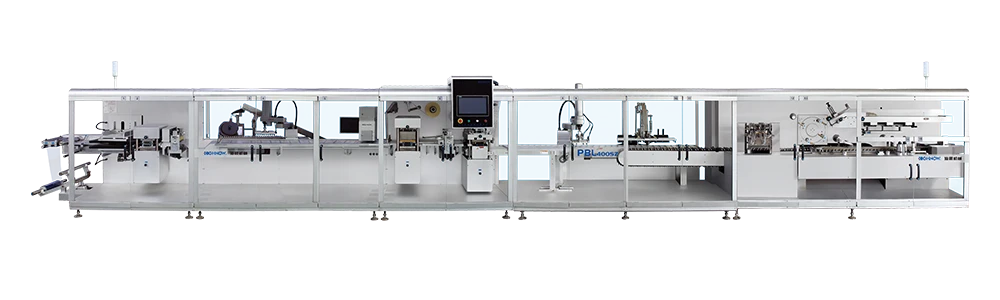
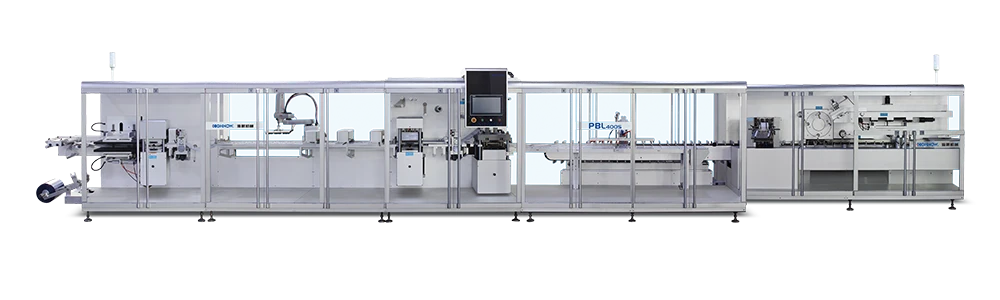
To see how different container types are accommodated in a single line, explore blister packaging solutions designed for ampoules, cartridges, and other parenteral containers.
Thermoforming for Deep Cavities
Ampoules and cartridges are taller than tablets or capsules. This means the blister cavities must be deeper—often significantly deeper—than those used for solid dose packaging.
The thermoforming challenge:
Standard blister forming equipment is designed for shallow cavities—typically 5–10 mm deep. Ampoules and cartridges may require cavities of 20 mm or more. Forming such deep cavities without thinning or tearing the plastic film requires specialized equipment.
Key design features:
-
Plug-assist forming: A mechanical plug pushes the heated film into the cavity before vacuum or compressed air completes the forming process. This ensures uniform wall thickness even in deep cavities.
-
Vacuum thermoforming: Some systems use vacuum-based rotary thermoforming with single-drum technology to achieve deep cavities up to 28 mm.
-
Material selection: Deeper cavities require materials with higher formability. PVC and PET are commonly used, though cold-formed aluminum foil may be specified for moisture-sensitive products.
What this means for you:
The ability to form deep cavities without compromising material integrity is essential for ampoule and cartridge packaging. If the cavity walls are too thin, they may puncture during sealing or handling. If the material is not sufficiently formable, the cavities may not fully capture the container shape—leading to movement during transport and potential damage.
Sealing and Container Closure Integrity
For any parenteral product, maintaining container closure integrity is paramount. The FDA explicitly requires that for sterile products, the integrity of the container closure system as it relates to preventing microbial contamination must be addressed.
The sealing challenge:
Ampoules and cartridges are sealed containers themselves—the ampoule is hermetically sealed glass, and the cartridge has rubber stoppers. The blister pack is secondary packaging, but it still plays a critical role in protecting the container and maintaining its integrity.
Key sealing considerations:
-
Seal quality: The blister seal must be consistent and complete. Any gap or breach in the seal could allow moisture or oxygen to reach the container—and potentially compromise the drug product.
-
Material compatibility: The lidding material must seal effectively to the forming film. For ampoules and cartridges, which may be packaged in high-barrier materials like cold-formed foil, the sealing parameters must be carefully controlled.
-
Inline inspection: Vision systems after sealing can detect and reject faulty seals before they reach the cartoning stage. HIGHNOW's lines incorporate advanced self-inspection functions that automatically recognize defective blisters and reject 100% of waste products.
Regulatory context:
PDA Technical Report No. 43 provides standardized quality criteria for glass containers including ampoules, cartridges, and vials. A separate PDA document addresses the identification and classification of nonconformities in glass containers for pharmaceutical manufacturing. These standards guide container manufacturers and pharmaceutical companies in incoming container acceptance inspection.
Integration with Cartoning and Secondary Packaging
A blister line for ampoules and cartridges does not stop at blister sealing. The finished blister cards must be inserted into cartons, bundled, and case-packed—all while maintaining the gentle handling that protects the fragile containers inside.
Key integration points:
-
Blister-to-cartoner transfer: Blister cards are transferred from the punch station to the cartoning machine, often via suction arms or robotic pick-and-place systems. The transfer must be smooth to avoid jostling the containers inside the blisters.
-
Leaflet insertion: Many pharmaceutical products require package inserts. Advanced lines use a combined push-rod structure—one for inserting leaflets and another for ampoules—to reduce insertion resistance and better protect glass containers.
-
Serialization: Regulatory requirements in many markets demand unique serialization codes on each carton. The line must integrate with serialization software without compromising speed or handling quality.
HIGHNOW's complete program enables full automation of the entire process: blister forming, product loading, automatic cartoning, and strapping. The modular design throughout the production line allows for flexible configuration and future scalability.
Actual Application Scenarios
A dental anesthetic manufacturer packaging glass cartridges
A manufacturer of dental anesthetics needs to package glass cartridges—each containing a single dose of local anesthetic—into blister packs for distribution to dental practices.
Key considerations:
-
Container stability: Cartridges are tall and narrow, requiring anti-tilt features during feeding and transfer.
-
Rubber component protection: The rubber plunger and septum must not be dislodged during packaging.
-
Sterility maintenance: The blister pack must provide an effective barrier to maintain sterility.
What to look for: A blister line with servo-controlled feeding, dedicated cartridge carriers, and high-barrier sealing materials.
A CMO packaging ampoules for multiple clients
A contract manufacturing organization packages ampoules for multiple pharmaceutical clients, each with different ampoule sizes and configurations.
Key considerations:
-
Quick changeover: The line must switch between ampoule sizes with minimal downtime.
-
Gentle handling: Ampoules are fragile and require short drop heights and minimal glass-to-glass contact.
-
Format flexibility: The system should accommodate various cavity depths and blister formats.
What to look for: A modular line with quick-change tooling and flexible feeding systems that can handle multiple container types.
For customized configurations that address specific production environments, explore how blister packaging lines can be tailored to your unique requirements.
Next Steps: From Understanding to Selection
Understanding how blister lines are designed for ampoules and cartridges is the first step toward making an informed equipment decision. The key factors to evaluate include:
-
Container types and dimensions: What ampoule sizes and cartridge configurations do you need to package?
-
Fragility profile: How sensitive are your containers to impact and handling?
-
Barrier requirements: What level of moisture and oxygen protection does your product require?
-
Production volume: How many containers per minute do you need to process?
-
Regulatory requirements: What serialization, traceability, and compliance standards must the line meet?
Once you have clarified these decision factors, comparing the specific capabilities of available packaging solutions becomes the next logical step. You can review HIGHNOW's blister packaging lines for ampoules, cartridges, and other parenteral containers—or explore customized configurations for specialized applications.
For additional technical resources on blister packaging line evaluation, read our related guide on key factors to consider before investing in a vial blister line.
Related Reading
-
How Does a Vial Blister Packaging Line Work? – A Step‑by‑Step Guide
-
What to Know Before Investing in a Vial Blister Line
-
Vial Breakage on Blister Lines? Causes and Fixes
-
5 Tips to Choose a Vial Blister Packaging Machine
-
Vial Blister Packaging 2026: 5 Emerging Technologies
This article is part of HIGHNOW's technical content library. No direct sales or pricing information is included. All technical discussions aim to help you make informed purchasing decisions.