English
 Pусский
 Español
You have a portfolio of injectable products—vials, ampoules, perhaps cartridges or pre-filled syringes. You know you need a blister packaging line to protect them, present them, and prepare them for market. But walking into a machine selection process without a clear framework is like navigating without a map. Specifications sheets blur together. Suppliers make similar claims. And the wrong choice can mean years of compromised efficiency, frequent downtime, or costly retrofits.
This guide offers five practical tips to structure your evaluation—so you can compare options objectively and choose a machine that truly fits your production reality.
1. Start with Your Product Portfolio, Not the Machine
It is tempting to begin with machine specifications—speed, format area, punching frequency. But the most common mistake in blister line selection is choosing a machine before fully understanding what needs to be packaged.
What to do:
List every container type you currently package—and every type you anticipate packaging in the next three to five years. Consider:
-
Container dimensions: Vial diameters, heights, and shapes vary significantly. A line designed for 2R vials may struggle with 50R bottles. HIGHNOW's blister lines, for example, are specifically designed for vials, ampoules, cartridges, oral liquid bottles, pre-filled syringes, and even special-shaped bottles.
-
Container fragility: Glass vials and ampoules require gentle handling to prevent breakage. Systems with servo-controlled feeders and short drop heights—such as HIGHNOW's Pioneer, Rocket, and Satellite feeders—are engineered specifically for delicate containers.
-
Material sensitivity: Does your product require high-barrier protection against moisture and oxygen? This will influence your choice of forming films (PVC, PVC/PVdC, cold-formed foil) and sealing materials.
-
Batch size and changeover frequency: If you run frequent small batches, prioritize quick-change tooling and flexible feeding systems. If you run long campaigns of a single product, sustained speed may matter more.
Why this matters:
A machine that cannot handle your full product range will create bottlenecks, require expensive retrofits, or force you to maintain multiple lines. Starting with your product portfolio ensures the machine serves your business—not the other way around.
To see how different container types are accommodated in a single line, explore blister packaging solutions designed for vials, ampoules, cartridges, and syringes.
2. Look Beyond Peak Speed to Sustained Throughput
Every supplier quotes a peak speed—often measured under ideal conditions with perfect materials and highly skilled operators. But your production line will not run under ideal conditions every day.
What to look for:
-
Sustained speed: Ask for demonstrated throughput over a full shift, including material changes and minor stoppages. A line rated at 400 blisters per minute may realistically deliver 300–350 in production.
-
Reject rate: A machine that runs fast but rejects 5% of blisters may be less productive than a slower machine with a 1% reject rate. HIGHNOW's lines incorporate advanced self-inspection functions that automatically recognize defective blisters, missing products, or missing leaflets, and reject 100% of waste products.
-
Changeover time: How long does it truly take to switch between vial sizes or blister formats? Quick-change tooling—such as HIGHNOW's modular design with tool-free changeovers—can save hours per week in multi-product facilities.
-
Integration with upstream and downstream equipment: A blister machine is rarely a standalone unit. It must synchronize with vial feeders, cartoners, bundlers, and case packers. HIGHNOW's lines enable full automation of the entire process: blister forming, product loading, automatic cartoning, and strapping.
Why this matters:
Peak speed sells machines. Sustained throughput pays for them. Evaluating real-world performance—not just brochure numbers—protects you from overpaying for capacity you cannot actually use.
3. Prioritize Gentle Handling to Protect Your Product
Glass vials are fragile. Breakage on the packaging line is not just a minor inconvenience—it can cause hours of downtime for cleaning, product loss, and regulatory exposure. The handling system is therefore one of the most critical components of any vial blister line.
What to look for:
-
Feeding technology: Traditional feeders can subject vials to abrupt movements and glass-to-glass contact. Look for servo-controlled feeders with vibratory plates, separating rollers, and vacuum grippers that place vials gently into cavities. HIGHNOW offers multiple feeder types—Leader, Planetary, Pioneer, Rocket, ESA, Long March, and Satellite—each designed for specific container types and gentle handling requirements.
-
Drop heights: Every transfer point—from feeder to cavity, from cavity to rejection—should minimize drop height. Short drops reduce impact force and breakage risk.
-
Anti-tilt and anti-vibration features: For pre-filled syringes and tall vials, anti-tilt mechanisms prevent tipping during transport. HIGHNOW's systems include dedicated syringe carriers and anti-tilt features that maintain syringe sterility and prevent plunger movement.
-
Inspection before packaging: Detecting glass defects before vials enter the packaging line can prevent breakage downstream. Look for lines with integrated vision inspection that can identify cracks, chips, and other defects.
Why this matters:
Every broken vial represents lost product, wasted material, and costly downtime. A line designed for gentle handling reduces breakage rates—and protects both your product and your production efficiency.
For customized handling solutions tailored to your container types, explore how packaging lines can be configured for your specific requirements.
4. Evaluate Compliance, Validation, and After-Sales Support
Pharmaceutical packaging is a regulated activity. Your equipment must not only perform—it must be validated, documented, and supported throughout its lifecycle.
What to look for:
-
Regulatory compliance: Does the equipment meet GMP, FDA, and CE requirements? HIGHNOW's machines are CE, ISO9001, GMP, and FDA certified. The company implements an end-to-end traceability system governing every production step from raw materials to finished goods.
-
Validation support: Can the supplier provide IQ, OQ, and PQ validation templates? Some suppliers offer one-to-one URS customization services to ensure the equipment meets your specific requirements.
-
Process parameter database: A pre-loaded database of proven process parameters can accelerate setup and reduce operator error. HIGHNOW's systems are pre-loaded with 1000+ proven process parameters for one-click optimization.
-
After-sales support: What is the Service Level Agreement? HIGHNOW offers 24/7 remote diagnostics via secure VPN, resolving over 80% of issues remotely. Critical spare parts are guaranteed for shipment within 24 hours. For issues requiring physical intervention, on-site support is available with a committed response time.
-
Product validation testing: Does the supplier offer to run your actual products and packaging materials through their equipment before purchase? HIGHNOW strongly recommends and offers No-Obligation Product Validation Tests, providing detailed reports with video footage and cost-saving analysis.
Why this matters:
Regulatory non-compliance can delay product launches, trigger inspections, or worse. A supplier that supports validation and provides robust after-sales service reduces your regulatory risk and operational downtime.
5. Think Beyond the Blister Machine to the Complete Line
A blister packaging machine does not operate in isolation. It is part of a broader packaging workflow that includes feeding, cartoning, bundling, and case packing. Evaluating the complete line—not just the blister machine—prevents integration headaches later.
What to look for:
-
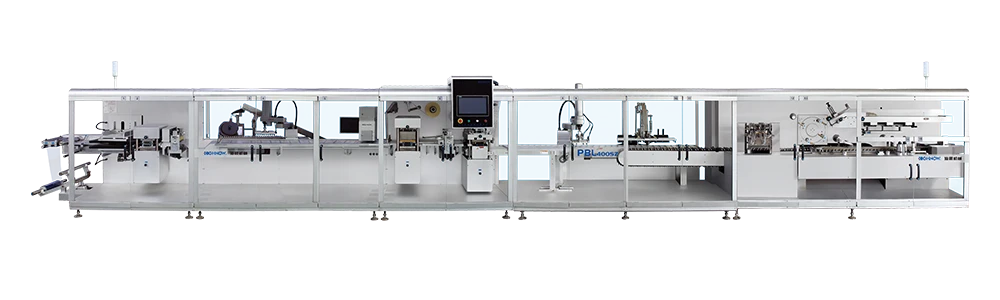
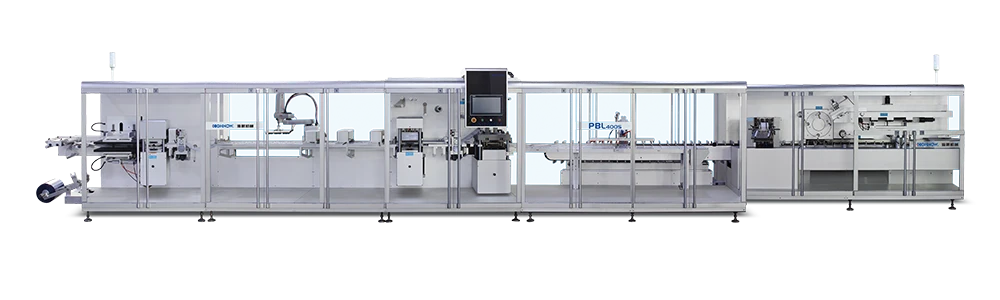
End-to-end automation: Does the supplier offer a complete line—from blister forming to case packing—or only individual machines? HIGHNOW's complete program enables full automation of the entire process: blister forming, product loading, automatic cartoning, and strapping.
-
Modular design: A modular line allows you to start with core capabilities and add modules as your business grows. HIGHNOW's modular design throughout the entire production line enables flexible configuration.
-
Integration with auxiliary equipment: Consider vision inspection systems, leaflet inserters, labeling machines, and coding equipment. HIGHNOW offers a full range of auxiliary equipment, including high-speed rotary labeling machines (0–700 bottles/min), weighing machines (±0.3g dynamic accuracy), and laser coders (200–600 m/min).
-
Scalability: Can the line accommodate future requirements—such as higher speed, new serialization standards, or additional inspection modules? Lines with servo-driven, modular stations are easier to upgrade than mechanically linked systems.
Why this matters:
A blister machine that cannot integrate with your existing or future equipment creates bottlenecks. A complete line—from a single supplier—reduces integration risk, simplifies project management, and ensures consistent quality across all packaging stages.
Putting the Tips Together — A Quick Reference Table
| Tip | Key Question | What to Look For |
|---|---|---|
| 1. Product portfolio | What containers do I package now and in the future? | Vial sizes, shapes, fragility, material sensitivity, batch frequency |
| 2. Sustained throughput | What is the real-world output over a full shift? | Sustained speed, reject rate, changeover time, line integration |
| 3. Gentle handling | How does the line protect my glass containers? | Servo-controlled feeders, short drop heights, anti-tilt features, pre-packaging inspection |
| 4. Compliance & support | Does the supplier support validation and long-term reliability? | GMP/FDA/CE compliance, validation templates, process database, SLA, product validation testing |
| 5. Complete line | Does the blister machine integrate with upstream and downstream equipment? | End-to-end automation, modular design, auxiliary equipment, scalability |
Next Steps: From Tips to Decision
These five tips provide a framework for evaluating vial blister packaging machines—but the final decision depends on your specific production reality. Start by documenting your product portfolio and throughput requirements. Then engage suppliers with a clear set of questions based on these tips. Request product validation tests using your actual materials. And evaluate not just the machine, but the complete line and the after-sales support that will sustain it.
Once you have clarified these key decision factors—such as your container types, required throughput, and integration needs—comparing the specific capabilities of available options becomes the next logical step. You can review HIGHNOW's vial blister packaging lines, which offer configurations ranging from high-speed commercial production to flexible multi-product applications, and explore how their modular design supports future scalability.
For additional technical resources on vial packaging line evaluation, read our related guide on key factors to consider before investing in a vial blister line.
Related Reading
-
How Does a Vial Blister Packaging Line Work? – A Step‑by‑Step Guide
-
What to Know Before Investing in a Vial Blister Line
-
Vial Breakage on Blister Lines? Causes and Fixes
-
5 Uses of Vial Blister Packaging in Pharmaceutical Manufacturing
-
Vial Blister Packaging 2026: 5 Emerging Technologies
This article is part of HIGHNOW's technical content library. No direct sales or pricing information is included. All technical discussions aim to help you make informed purchasing decisions.