English
 Pусский
 Español
Article Overview: Selecting the right automatic packaging machinery requires a structured comparison of specifications, operating costs, integration complexity, and compliance fit. This guide provides an evaluation framework for procurement teams and technical architects, using neutral criteria and trade-off analysis to support informed decisions.
Contents
- What Should You Consider When Comparing Automatic Packaging Machinery?
- Key Specifications That Differentiate Automatic Packaging Machinery
- How Do Operating Costs and ROI Vary Across Automatic Packaging Machinery Types?
- Integration and Compatibility: Matching Automatic Packaging Machinery to Your Line
What Should You Consider When Comparing Automatic Packaging Machinery?
When evaluating automatic packaging machinery, buyers must balance multiple dimensions. The first checkpoint is throughput capacity, measured in units per minute or cycles per hour. However, peak speed alone can be misleading if changeover times are long or the machine cannot handle your product variants. The second dimension is flexibility: can the same automatic packaging machinery handle different pack formats, materials, or product sizes with minimal mechanical adjustment? Third, integration complexity: will the machine connect seamlessly to your existing conveyors, controls, and upstream/downstream equipment? Fourth, compliance: for pharmaceutical lines, cGMP, 21 CFR Part 11, and validation documentation are mandatory; food and cosmetics lines have their own hygiene and traceability standards. Finally, total cost of ownership (TCO) includes purchase price, installation, training, spare parts, energy consumption, and maintenance labor.
Below we compare two common architectural approaches: modular automatic packaging machinery versus integrated turnkey lines. The choice depends on your production volume, product mix, and expansion plans.
Modular Automatic Packaging Machinery
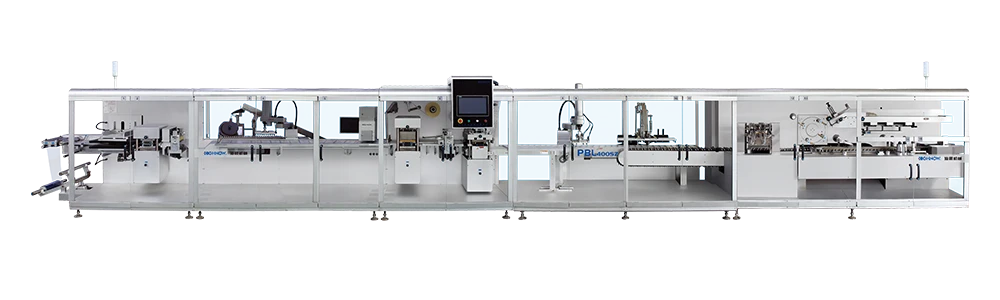
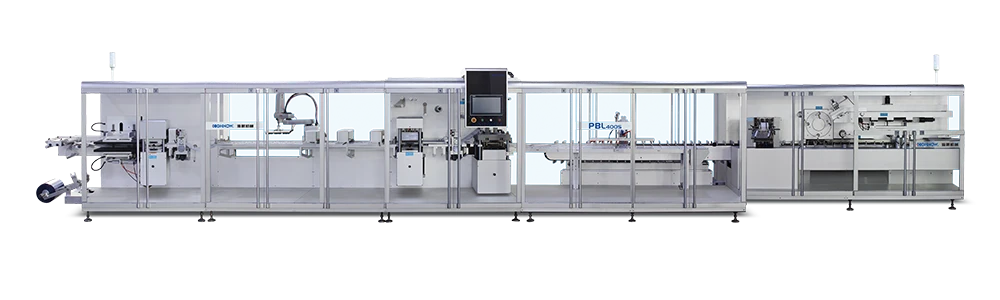
Option A: Individual machines (e.g., cartoner, labeler, case packer) sourced separately and linked through conveyors. This approach offers high flexibility—each component can be upgraded or replaced independently. It suits facilities with frequent product changes or phased automation budgets.
Option B: Integrated turnkey line from a single supplier, where all stations are pre-engineered to operate in sync. This reduces integration risk and shortens commissioning time but may limit future flexibility if your line needs to handle a new pack format.
Buyer note: If your product range is stable and you forecast steady volume growth, an integrated line often delivers better OEE. For high-mix environments, modular automatic packaging machinery may offer lower long-term risk.
Use this decision matrix to weigh your priorities:
- Throughput requirement: 50–200 units/min → modular; above 200 units/min → integrated often better.
- Changeover frequency: More than twice per shift → modular; less than once per day → integrated.
- Available floor space: Limited footprint → integrated typically compacts designs.
- In-house engineering capability: Strong controls team → modular feasible; limited resources → integrated preferred.
Key Specifications That Differentiate Automatic Packaging Machinery
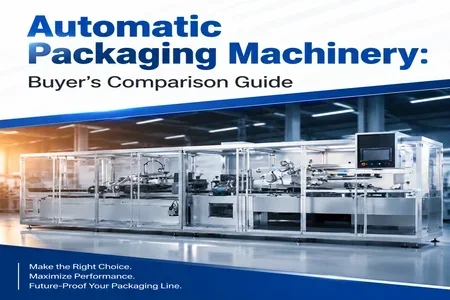
The following table compares critical specification parameters across two representative automatic packaging machinery categories: a mid-range cartoning machine and a high-speed blister packaging line. Actual values depend on your product geometry and materials; use this as a starting point for vendor discussions.
Key specification comparison
| Criterion | Mid-Range Automatic Cartoning Machine | High-Speed Blister Packaging Line |
|---|---|---|
| Maximum mechanical speed | 120 cartons/min | 300 blisters/min (forming) |
| Changeover time (typical) | 15–30 minutes | 30–60 minutes |
| Footprint (L × W × H) | 4 m × 1.5 m × 1.8 m | 8 m × 2.5 m × 2.2 m |
| Electrical rating | 5–7 kW | 15–25 kW |
| Validation support | IQ/OQ documentation | Full cGMP validation package |
| Typical application | Pharma vials, food cartons | Pharma blister packs for tablets/capsules |
Specifications alone do not determine suitability. You must also consider the machine's ability to handle your specific materials—for example, carton board stiffness or blister film thickness. Always request a sample run with your actual packaging materials before finalizing a purchase.
How Do Operating Costs and ROI Vary Across Automatic Packaging Machinery Types?
Total cost of ownership extends far beyond the purchase price. To compare operating costs objectively, follow this evaluation flow.
Phase 1: Estimate annual operating hours and throughput
Determine planned runtime: 2 shifts (16 h/day) or 3 shifts (24 h/day)? Multiply by 250 working days. Use the nominal speed of each automatic packaging machinery option, adjusted for your typical changeover and downtime (target OEE 75–85%). Calculate annual output in units.
Phase 2: Calculate direct costs per unit
Sum: energy cost (kW × hours × rate), consumables (film, glue, spare parts), and labor. For automatic packaging machinery, labor savings are a key driver—compare full-time equivalent operators needed. More automated machines may reduce headcount but require higher-skilled technicians.
Phase 3: Factor in maintenance and validation costs
Preventive maintenance contracts vary: some suppliers include remote monitoring and diagnosis. For regulated industries, revalidation after every changeover can be expensive; automatic packaging machinery with recipe-based changeover may reduce this burden. Request a five-year cost projection from each vendor.
Phase 4: Compute payback and net present value
Compare the difference in annual operating cost between your current line and each automatic packaging machinery option. Divide the net investment by annual savings to get payback (target < 24 months). Use a discount rate of 8–10% for NPV analysis over five years.
Remember that soft benefits—quality consistency, reduced waste, and brand protection—are harder to quantify but often justify a premium investment in automatic packaging machinery.
Integration and Compatibility: Matching Automatic Packaging Machinery to Your Line
New automatic packaging machinery must interface with existing equipment: feeders, conveyors, checkweighers, metal detectors, and case packers. Compatibility is often the most underestimated cost driver. Evaluate each candidate on these criteria:
- Control system: Does the machine use an open protocol (e.g., OPC UA, Ethernet/IP) or a proprietary platform? Open protocols simplify integration with MES and SCADA.
- Physical footprint and layout: Does the machine require straight infeed or can it accept a 90° transfer? Do you need to relocate existing equipment?
- Material flow: Check product infeed orientation, gap control, and reject handling. Automatic packaging machinery with integrated vision inspection can add value but may increase cycle time.
- Changeover methodology: Some machines offer tool-less changeover with stored recipes; others require manual adjustments. Compare recipe storage capacity and ease of recall.
Integration approach: Standalone vs. full line
Option A: Add a single automatic packaging machine (e.g., a cartoner or labeler) to an existing line. This minimizes capital outlay but requires careful conveyor tuning and possible addition of accumulation tables.
Option B: Deploy a completely integrated line from a single supplier, such as a blister line combined with cartoning and case packing. This ensures synchronous operation but locks you into one vendor's ecosystem.
Buyer note: For greenfield projects, the integrated approach is often simpler. For brownfield upgrades, standalone automatic packaging machinery with flexible controls may be more practical. Always request a line simulation from the supplier before committing.
FAQ
What is the typical lifespan of automatic packaging machinery?
With proper preventive maintenance, automatic packaging machinery can operate reliably for 10 to 15 years. Key wear components such as bearings, seals, and drives may need replacement after 5 to 7 years. When comparing machines, ask about the availability of spare parts and local service support.
How do I determine the right level of automation for my packaging line?
Start by analyzing your current labor costs, throughput requirements, and product mix. If you run more than two product formats per shift, consider automatic packaging machinery with quick-change features. If your line is already semi-automated, incremental automation (e.g., adding an automatic cartoning machine) may offer the best ROI. Consult our product FAQ for more specific guidance on machine selection.
What certifications should automatic packaging machinery have for pharmaceutical applications?
For pharmaceutical lines, automatic packaging machinery should be cGMP-compliant and come with IQ/OQ documentation. Additional certifications like CE, UL, or 21 CFR Part 11-compliant controls may be required depending on your market. Always verify with your supplier; many, like service-oriented providers, offer validation support.
Is it better to buy automatic packaging machinery from a single supplier or multiple vendors?
There is no single correct answer. A single supplier simplifies project management and ensures compatibility, but may reduce your leverage on pricing and future upgrades. Multiple vendors can give you best-of-breed components, but integration risk increases. We recommend a hybrid approach: source the core line from one supplier and peripheral equipment (e.g., labelers, checkweighers) from specialist vendors if they offer proven compatibility.
How much does automatic packaging machinery typically cost?
Cost varies widely by complexity, speed, and build quality. A standalone automatic cartoning machine for moderate speeds may range from $80,000 to $200,000; a fully integrated blister packaging line with cartoning can exceed $1 million. Obtain detailed quotations that include installation, training, and first-year spare parts. Validate against your specific throughput and regulatory requirements.
Conclusion
Choosing the right automatic packaging machinery demands a disciplined comparison of specifications, operating costs, integration requirements, and supplier capabilities. This guide has provided a buyer-side framework that de-emphasizes hype and focuses on trade-offs: modular versus integrated, speed versus flexibility, initial price versus total cost. By applying the evaluation steps outlined above—through the lens of your actual production environment—you can select automatic packaging machinery that delivers reliable performance and sustainable ROI. Always test candidate machines with your own packaging materials and request documented support for all claimed performance figures. For further reading on specific machine types, refer to our product FAQ section.
Related site pages: Home.