English
 Pусский
 Español
For pharmaceutical manufacturers, packaging decisions are never trivial—especially when it comes to injectable drugs packaged in glass vials. Between stringent regulatory requirements, the need to maintain sterility throughout the supply chain, and the growing complexity of global distribution, choosing the right packaging format can feel like navigating a maze. Vial blister packaging has emerged as a solution that addresses many of these challenges simultaneously. This guide explores five distinct applications where blister packaging for vials delivers measurable value—from protecting sensitive drug formulations to supporting patient adherence in clinical settings.
1. Protecting Injectable Drugs from Environmental Degradation
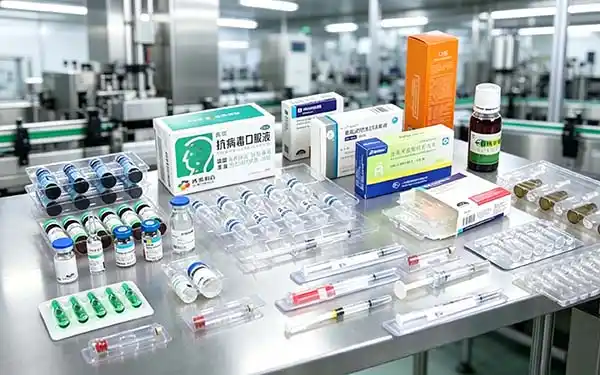
The most fundamental role of any pharmaceutical packaging is protection. For vial-contained injectable drugs—whether vaccines, biologics, or liquid formulations—this means creating a barrier against moisture, oxygen, light, and physical damage. Blister packaging achieves this through a combination of thermoformed cavities and high-barrier sealing materials.
What this means in practice:
-
Moisture protection: Blister packs use materials like PVC, PCTFE, or cold-formed foil (Alu-Alu) that provide an impermeable barrier to moisture. For hygroscopic drugs that degrade upon exposure to humidity, this directly translates to extended shelf life.
-
Light shielding: Opaque blister materials are available to protect light-sensitive medications from harmful UV rays—a critical requirement for many injectable biologics.
-
Physical protection: Unlike loose vials that can knock against each other during transport, blister packaging secures each vial in its own cavity, reducing breakage risk. Industry sources indicate that specially designed vial trays have demonstrated breakage reduction of up to 95%.
Why this matters to you: Extended shelf life means fewer product losses due to expiration, broader geographic reach for your products, and greater flexibility in supply chain planning. For manufacturers exporting to multiple regions with varying climate conditions, this protection becomes even more critical.
Learn more about high-barrier blister packaging solutions designed for sensitive drug products.
2. Supporting Regulatory Compliance and Container Closure Integrity
Regulatory bodies worldwide—including the FDA and WHO—maintain rigorous standards for pharmaceutical packaging. The FDA requires that packaging systems demonstrate fitness for intended use, while USP chapters such as <382> provide frameworks for evaluating packaging and delivery systems including vials, syringes, and cartridges. Container Closure Integrity (CCI) is essential to protect the drug product through shelf life and to demonstrate an integral system to regulatory agencies.
Vial blister packaging supports compliance in several ways:
-
Tamper-evident sealing: Blister packs provide clear visual evidence of tampering—if the seal is broken, the product has been compromised.
-
Traceable manufacturing: Packaging materials in the healthcare sector mandate traceable manufacturing processes and sophisticated quality control systems.
-
Primary packaging integrity: As primary packaging (the layer in direct contact with the medicine), blister cavities must meet the same rigorous standards as vials themselves.
WHO guidelines further emphasize that packaging operations must follow clearly defined procedures in accordance with applicable manufacturing and marketing authorizations. Vial blister packaging lines that incorporate automated inspection systems can help manufacturers meet these requirements consistently.
Why this matters to you: Non-compliance can result in product recalls, regulatory delays, or even marketing authorization suspension. Choosing a packaging format that inherently supports compliance reduces regulatory risk and streamlines the approval process for new products.
Explore compliance-focused packaging solutions for vial products.
3. Enabling Unit-Dose Dispensing for Clinical Trials and Specialty Medications
Clinical trials present unique packaging challenges. Patients may need to follow complex dosing schedules that involve fluctuating dosages or a combination of placebo and active medications. Traditional multi-dose vials make it difficult to track individual dose administration accurately.
Blister packaging addresses this through unit-dose design:
-
Dose-specific compartments: Each blister cavity holds a single vial, clearly labeled with the day, date, and time of the dose.
-
Smart packaging integration: Advanced blister packs equipped with sensors—such as WestRock's CerePak blisters with concealed microprocessors and printed conductive inks—can log the date, time, and location of each dose. This feature is especially vital for treatment regimens involving complex dosing schedules.
-
Adherence tracking: Smart blister technologies using RFID tags, QR codes, or conductive inks can track dose-taking and provide real-time feedback, boosting patient adherence—particularly for chronic conditions or clinical studies.
According to industry analysis, the rising demand for patient compliance and the growing need for advanced packaging solutions are major drivers of the pharmaceutical blister packaging market. The global pharmaceutical blister packaging market was valued at USD 23.72 billion in 2025 and is forecast to reach USD 33.98 billion by 2030.
Why this matters to you: For clinical trial sponsors, accurate dosing data is non-negotiable. Blister packaging with integrated tracking capabilities reduces the risk of dosing errors and provides auditable records for regulatory submission. For specialty pharmacies serving patients with complex medication regimens, unit-dose blister packaging simplifies dispensing and improves patient outcomes.
4. Streamlining High-Volume Production and Automated Packaging Lines
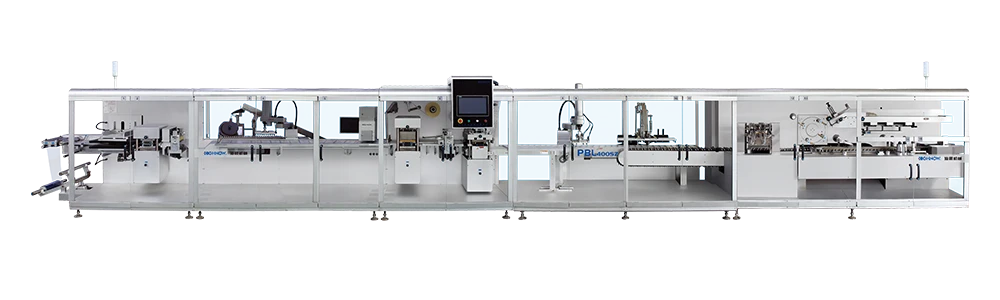
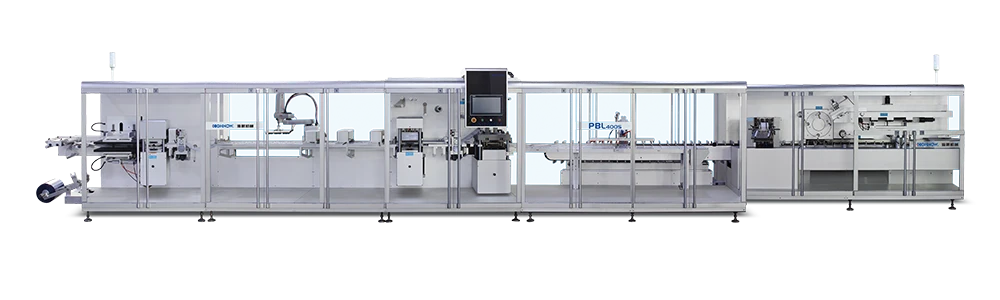
For pharmaceutical manufacturers operating at scale, packaging efficiency directly impacts the bottom line. Vial blister packaging is designed for high-speed automated lines that can process thousands of units per hour.
Key production advantages:
-
High throughput: Modern blister packaging lines can achieve production speeds of 16–35 cycles per minute or higher, with some systems capable of handling up to 400 cartons per minute depending on configuration.
-
Automated inspection: Integrated vision systems can automatically identify damaged blisters, missing vials, or labeling errors, with 100% rejection of defective units. This reduces the need for manual quality checks and minimizes the risk of defective products reaching patients.
-
Module flexibility: Blister packaging lines can be configured with modular components—including vial feeders, cartoning machines, bundling machines, and case packers—to create end-to-end automated packaging workflows.
The thermoformable blister packs segment continues to dominate the pharmaceutical blister packaging market. Industry analysis shows that the Asia Pacific pharmaceutical blister packaging market alone was estimated at USD 9.68 billion in 2024 and is expected to reach USD 13.16 billion by 2029.
Why this matters to you: Higher throughput means lower cost per unit. Automated inspection reduces labor costs and human error. Modular line design allows you to scale capacity as your business grows without replacing entire systems. For manufacturers serving high-demand markets, these efficiency gains translate directly to competitive advantage.
Discover integrated packaging line solutions for high-volume vial production.
5. Facilitating Global Distribution and Cold Chain Logistics
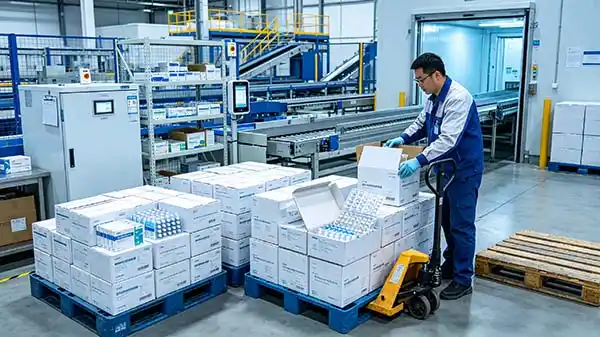
Pharmaceutical products travel complex, often transcontinental supply chains. Vial blister packaging is designed to withstand the rigors of global distribution while maintaining product integrity.
Distribution advantages:
-
Compact footprint: Thermoforming can reduce a blister footprint by up to 65% compared to other blistering materials such as cold-formed foil. Smaller packaging means more products per shipping container and lower transportation costs.
-
Temperature stability: Blister packaging provides effective barrier protection that helps maintain product stability across temperature-variant environments—a critical consideration for products that may experience temperature fluctuations during transit.
-
Durable protection: Blister packaging shields contents from impacts, moisture, and heat, enhancing medicines' shelf life and transportability. During the pandemic, blister packaging played a pivotal role in the international transport and storage of medications.
Note: As of 2025, the pharmaceutical blister packaging market continues to expand, driven by rising chronic disease prevalence, aging populations, and advancements in drug delivery technologies. According to the United Nations ESCAP, about 12.4% of the Asia-Pacific population was 60 years or older in 2016, projected to reach 1.3 billion by 2050, driving demand for pharmaceutical products and their packaging.
Why this matters to you: For manufacturers exporting to multiple regions, packaging that reduces shipping costs while maintaining product integrity is invaluable. The ability to withstand temperature variations and physical stresses during transport reduces the risk of product loss and ensures that patients receive medications in optimal condition.
Actual Application Scenarios
Scenario 1: A vaccine manufacturer scaling up for global distribution
A vaccine producer needs to ship millions of doses to multiple countries with varying climate conditions. Key considerations include:
-
Protection: High-barrier blister materials must maintain vaccine efficacy despite temperature fluctuations during transit.
-
Traceability: Each unit needs clear labeling and batch tracking for regulatory compliance.
-
Efficiency: Production lines must handle high volumes while maintaining quality control.
For this scenario, a blister packaging line with integrated inspection, high-speed cartoning, and bundling capabilities would be essential.
Scenario 2: A clinical trial sponsor managing a complex multi-drug protocol
A pharmaceutical company running a Phase III trial needs to package multiple medications—including both active drugs and placebos—for patients following a precise dosing schedule. Key considerations include:
-
Unit-dose accuracy: Each blister must contain exactly one dose of the correct medication.
-
Tracking capability: The packaging should support dose-by-dose tracking to monitor patient adherence.
-
Regulatory readiness: Packaging documentation must support regulatory submission.
For this scenario, blister packaging with integrated smart tracking capabilities and clear dose labeling would be critical.
See how custom packaging solutions address specific application requirements.
Next Steps: From Application to Selection
Understanding the five key applications of vial blister packaging is the first step toward making an informed packaging decision. The next logical step is to evaluate specific equipment capabilities against your production requirements—whether you need high-speed throughput for commercial manufacturing, flexible configurations for clinical trial batches, or specialized features for cold chain logistics.
Once you have clarified these key decision factors—such as required production capacity, product sensitivity profile, and regulatory requirements—comparing the specific specifications of available packaging solutions becomes the next logical step. You can review HIGHNOW's blister packaging lines for high-volume vial production or explore customized configurations for specialized applications.
For additional guidance, explore vial packaging solutions and industry insights.
Related Reading
-
How to Choose a Vial Blister Packaging Line for Your Production Volume
-
Understanding Container Closure Integrity Testing for Injectable Drugs
-
Blister Packaging vs. Traditional Vial Trays: A Comparative Guide
-
Regulatory Considerations for Pharmaceutical Primary Packaging
-
Smart Packaging Technologies in Clinical Trial Supply
This article is part of HIGHNOW’s technical content library. No direct sales or pricing information is included. All technical discussions aim to help you make informed purchasing decisions.