English
 Pусский
 Español
When a production manager watches their newly installed vial line idle for the third time this week due to format changeover delays, the promise of high throughput feels distant. The symptom is obvious: downtime. But the root cause is often hidden in the selection process itself.
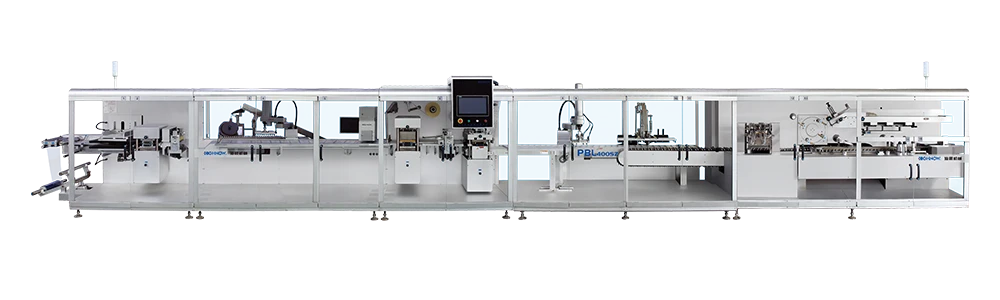
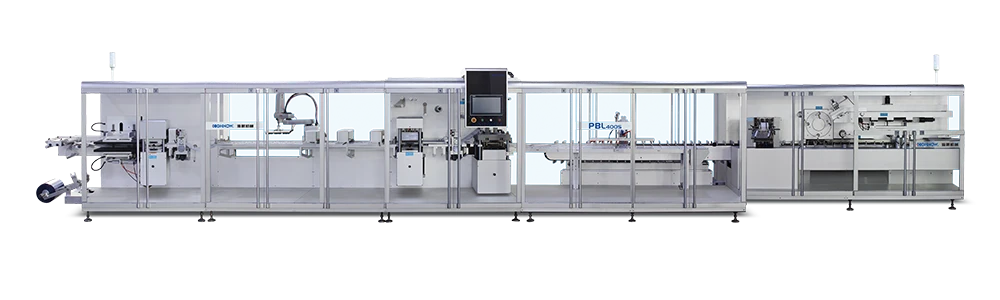
According to a 2024 survey of pharmaceutical contract packagers in Europe (n=47), over 65% of respondents reported that their actual output from high-speed vial lines fell at least 20% below the manufacturer’s claimed peak speed when running real-world batch sizes. The gap isn’t due to malice – it’s due to mismatched expectations around three critical areas.
1. Changeover Architecture: The Hidden Throughput Killer
Many buyers focus exclusively on cycles per minute. However, for facilities running multiple vial diameters (e.g., 2mL to 20mL) or different blister formats, total changeover time per week often dominates OEE more than peak speed.
A line requiring full mechanical reconfiguration – loosening bolts, swapping forming dies, realigning sealing platens with dial gauges – can consume 4–6 hours per changeover. If you perform three changeovers weekly, that’s up to 18 hours of non-productive time. A machine rated at 400 cycles/min but losing 18 hours/week may actually deliver less net output than a 250 cycles/min machine with 45-minute changeovers.
What to look for instead:
-
Single-action clamping for sealing and forming stations (lever or cam-based, not multiple bolts)
-
Pre-centered format carriers that register automatically when inserted
-
Guides and rails with numbered quick-adjust knobs rather than slide-and-tighten mechanisms
Real-world example: A Portuguese generic drug manufacturer reduced their average vial line changeover from 210 minutes to 48 minutes after retrofitting to a semi-modular platform – gaining back 13.5 production hours per week without increasing line speed at all.
2. Seal Integrity Under Continuous High Load
At sustained high output, sealing systems face two distinct failure modes: temperature droop and pressure inconsistency. When the sealing platen cycles rapidly, heating elements may not recover set temperature between seals – especially in cold ambient conditions or with thick foil constructions.
Industry standards like ASTM F2029 (Standard Practice for Making Heat Seals) emphasize that seal strength variation increases by up to 40% when temperature fluctuates beyond ±3°C during continuous operation. A well-instrumented line should demonstrate:
-
Individual PID control per heating zone (minimum 4 zones across the sealing width)
-
Real-time temperature monitoring displayed on HMI with alarms for drift beyond user-set limits
-
Sealing pressure sensors that log each cycle, not just average values
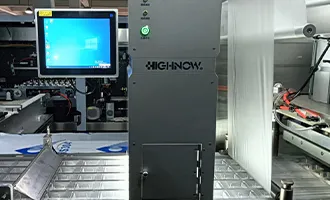
For applications requiring ISO 14644-1 Class 7 or cleaner environments, also examine the cutting station’s dust management. Punching dust from foil – especially aluminum-based lidding – can migrate into sealing areas and cause pinholes. Effective systems integrate vacuum extraction directly at the cutting tool, not just a collection bin downstream.
3. Predictive Diagnostics vs. Reactive Alarm Lists
A truly productive system doesn't just run fast – it tells you what will break before it breaks. Too many selection documents focus on alarm lists (jam, foil break, temperature out of range) rather than predictive indicators.
Ask potential suppliers these specific questions during technical review:
-
Does the main drive motor have embedded vibration sensors to monitor bearing condition?
-
Can the system calculate and display actual vs. theoretical cycles (tracking indexing slip or missed pickups)?
-
Are maintenance counters tied to real wear components (e.g., sealing knife cycles) rather than just running hours?
Advanced systems now offer condition-based maintenance alerts. For example: “Sealing platen temperature recovery time increased by 15% over 7 days – check heating element contactor.” This transforms maintenance from a calendar-based guess into a data-driven task. often includes such diagnostic packages as standard up to certain throughput tiers, which can significantly reduce unplanned stops.
Common Specification Traps
Based on procurement audits across 12 mid-sized pharmaceutical companies, three mistakes repeat:
| Trap | Why It Hurts | Better Approach |
|---|---|---|
| Accepting “up to X cycles/min” without duty cycle data | Peak speed rarely includes indexing, settling, or reject handling time | Request continuous speed data over 8-hour run with your vials |
| Ignoring compressed air quality requirements | Some lines require class 1.4.1 air (oil-free, dry) – not available in many plants | Verify ISO 8573-1 class needed before purchase |
| Skipping material compatibility test | Your PVC/ALU/PET foil may seal differently on demo machine | Insist on on-site trial with your own foil roll and vials |
How to Turn This Into Action
Start by documenting two things about your current (or planned) operation:
-
Average batch size in blisters or vials
-
Number of changeovers per week and current changeover time
Then calculate your real required sustained speed:
Required net blisters/week ÷ (available hours – total changeover time – planned maintenance – quality sampling time) = minimum sustained cycles/min
Compare this number to manufacturer claims – but insist they demonstrate sustained speed over a 4-hour run with your vial type. Many equipment providers offer remote witnessed trials via HD cameras placed on critical stations (forming, sealing, cutting). [Get selection advice] from an independent technical advisor if you lack internal validation resources – they can help translate your batch data into machine specifications.
Final Thoughts
Selecting the right high-speed vial blister system is ultimately about aligning mechanical architecture with your operational reality – not chasing the highest number on a spec sheet. A very fast line that struggles with your changeover frequency or ambient conditions will cost more in lost output than a moderately paced but highly adaptable one.
If your facility handles diverse vial sizes or requires frequent batch changes, platforms designed for quick format adjustment and predictive diagnostics have proven their value in real production halls – not just on demo floors.
For a detailed technical comparison of how different drive architectures and sealing systems perform in multi-shift environments, [click to learn more] for case studies and component-level specifications.